Forty Rejection Letters, One Operating Room, and the Woman Who Rebuilt the Broken Heart
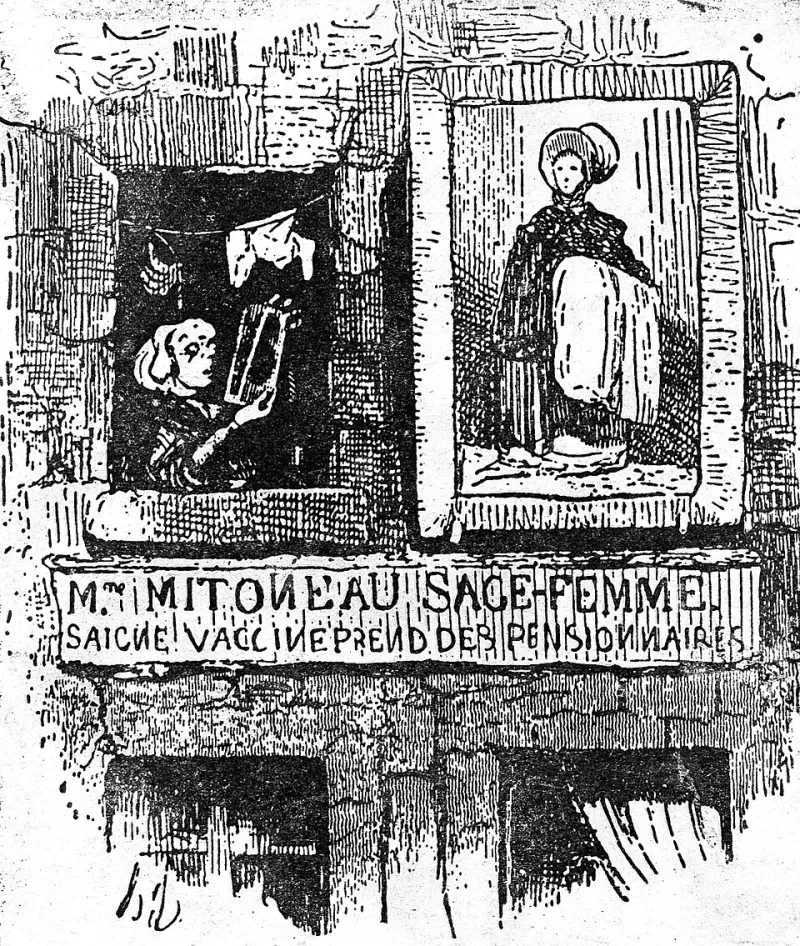
Photo: Unknown, CC BY 4.0, via Wikimedia Commons
The Letter Arrived Again
After a while, you stop being surprised by the envelope. You recognize the weight of it, the particular thin quality of paper that signals a form letter rather than a personal response. You learn to read the polite language — your application was carefully considered — as the bureaucratic version of a door shutting in your face.
For the woman at the center of this story, those envelopes arrived forty times.
Forty medical schools. Forty rejections. And behind every one of them, rarely stated outright but always present, the same unspoken calculation: a woman in a surgical theater was a problem the medical establishment of mid-twentieth century America had no interest in solving.
What the establishment didn't account for was what she would do next.
The Door Nobody Would Open
To understand how thoroughly the medical system was designed to exclude women from surgery — and cardiac surgery specifically — you have to understand what surgery looked like in the postwar decades. It was a prestige hierarchy, almost militaristic in its culture, built around a particular image of who belonged in an operating room. Women could be nurses. They could be researchers. They could, if they were very lucky and very persistent, sometimes become physicians in fields deemed appropriately feminine — pediatrics, perhaps, or psychiatry.
Cardiac surgery was something else entirely. It was new, dangerous, and glamorous in the way that only genuinely life-or-death work can be. The pioneers of the field were treated like astronauts. The idea of a woman performing open-heart procedures wasn't just unusual — it was, to most of the men running the programs, actively absurd.
The rejection letters didn't always say this. They cited class sizes, qualifications, fit. But the pattern was consistent enough that it stopped being coincidence and started being policy.
She understood this. She applied anyway, forty times, because she had decided that the alternative — not applying — was the only outcome she was unwilling to accept.
The Crack in the Wall
The path that finally opened wasn't the one she'd been trying to force. It rarely is.
An overseas program. A mentor who cared more about ability than convention. A surgical environment where the usual gatekeepers weren't in the room, where the question wasn't who are you but can you do this — and where the answer, when she was finally given the chance to demonstrate it, was unambiguous.
She could do it. She could do it better than most of the people who had been handed access without question.
The procedures she began developing weren't incremental refinements. They were structural reimaginings of how cardiac surgery could work — techniques that reduced operating time, improved outcomes for patients who had previously been considered too high-risk for intervention, and opened up possibilities that the field had assumed were years or decades away.
She wasn't working from a position of institutional support. She was working from a position of having nothing left to lose, which — as anyone who has ever been backed into a corner will tell you — is a surprisingly clarifying place to operate from.
What Systematic Exclusion Actually Looks Like
It's tempting to describe discrimination as a single dramatic moment — a slammed door, a cruel word, a clear villain. The reality is almost always more banal and more exhausting than that.
For women trying to enter surgical specialties in the mid-twentieth century, the exclusion was embedded in process. It was in the recommendation letters that never quite said enough. It was in the informal networks where surgical residencies were filled before they were ever officially posted. It was in the culture of operating rooms where a woman's presence was treated as an anomaly requiring explanation, while a man's presence required none.
It was in forty form letters that all said carefully considered and all meant the same thing.
The cumulative effect of that kind of exclusion isn't just professional — it's psychological. It is designed, whether consciously or not, to make you doubt your own assessment of your abilities. To make you wonder whether the problem is the system or whether it's you. To wear down the certainty that got you to the door in the first place.
The women who broke through weren't simply talented. They had to be talented and resistant to a years-long campaign of institutional gaslighting. That's a different and considerably harder thing.
The Techniques That Outlasted the Resistance
Here is the thing about surgical innovation: it doesn't care who developed it. A technique that saves lives gets used, eventually, regardless of the politics surrounding its origin.
The procedures she pioneered — refined in operating rooms that had been reluctant to have her, documented in papers that journals had been reluctant to publish — became standard practice. Surgeons trained in programs that had once refused her applications learned her methods without always knowing whose methods they were. Patients who survived procedures that would previously have been impossible benefited from work done by a woman the system had tried forty times to turn away.
This is how a lot of history actually works. The credit gets distributed unevenly. The doors that were closed get quietly forgotten. The story gets tidied up into something more comfortable.
What Forty Letters Actually Proved
There's a version of this story that frames the rejection as the obstacle and the eventual success as the triumph over it. That framing is too simple.
The forty rejection letters didn't just delay her career. They shaped it. They forced her into programs and environments and approaches she might never have found through a conventional path. They built a kind of resilience — and a kind of fury — that became inseparable from the quality of her work.
She wasn't successful in spite of the closed doors. She was, in some complicated and uncomfortable way, shaped by them.
That's not an argument for keeping doors closed. It's an argument for paying attention to who we're turning away, and what we lose every time we do — not just for the person standing on the other side of the door, but for everyone whose life might have been saved by the work they were never allowed to do.
Forty letters. One operating room. Millions of heartbeats that kept going because she refused to stop.