Composing in the Dark: How Beethoven Turned Silence Into the Greatest Music Ever Written
The Sound Stopped. He Kept Going.
Sometime around 1818, Ludwig van Beethoven's hearing gave out completely. Not partially, not frustratingly — completely. The man who had spent his entire life translating the invisible language of sound into written music was now operating in total silence. He was 47 years old, arguably at the height of his creative powers, and the one sense his entire career depended on had abandoned him for good.
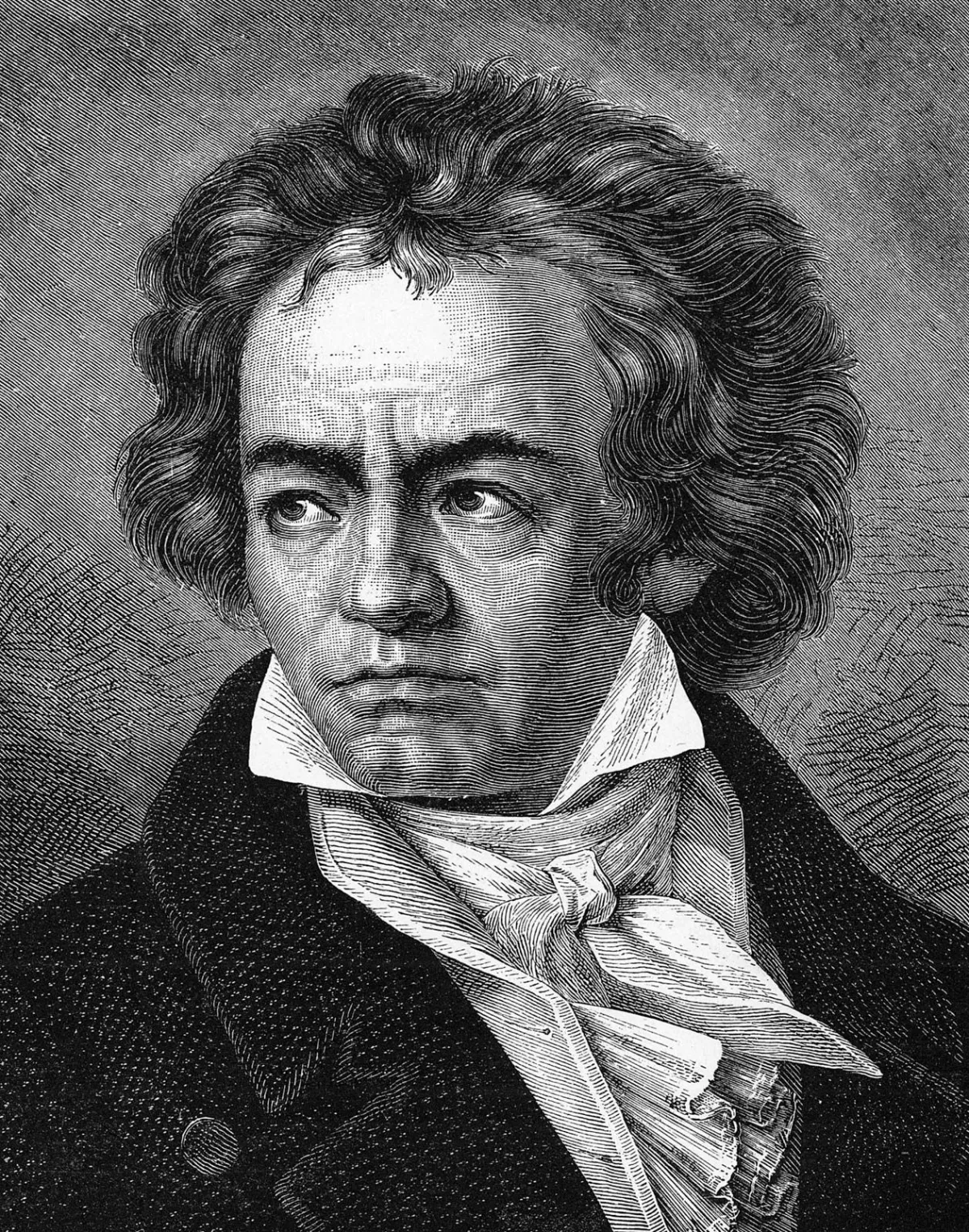 Photo: Ludwig van Beethoven, via cdn.britannica.com
Most people would have stopped. Most people would have had every logical reason to stop. Beethoven did not stop.
Instead, he did something that still baffles neuroscientists, musicologists, and anyone who has ever tried to hum a tune they half-remember: he wrote the Ninth Symphony. He wrote string quartets so harmonically complex they wouldn't be fully understood for another century. He composed music that felt like it came from somewhere deeper than the human ear could access — because, in a very real sense, it did.
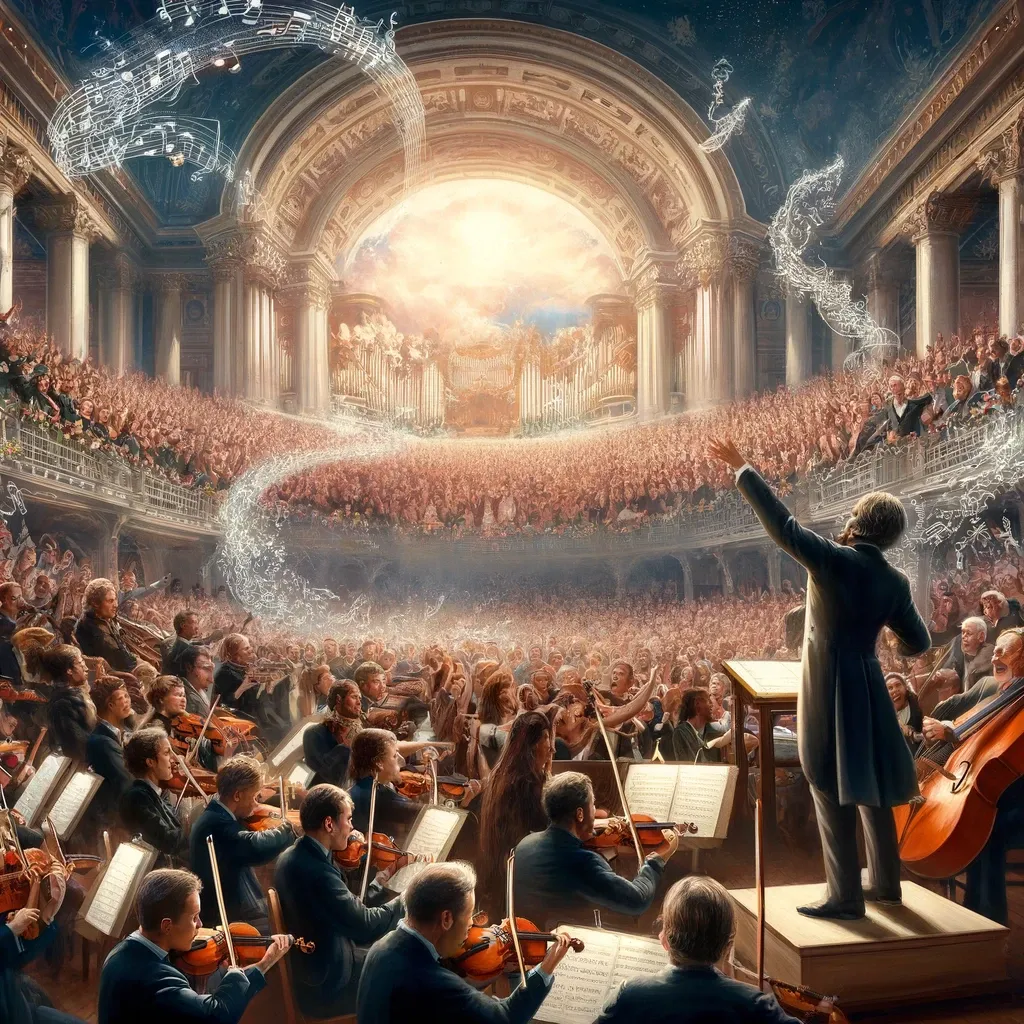 Photo: Ninth Symphony, via lvbeethoven.com
The story of Beethoven isn't just a biography. It's a case study in what happens when the most obvious path to success is taken away entirely.
A Slow Catastrophe
The hearing loss didn't arrive all at once. It crept in during Beethoven's late twenties, a low hum of wrongness that he initially dismissed, then panicked over, then tried to hide. By 1802, he was so distressed by what was happening to him that he wrote what's now known as the Heiligenstadt Testament — a letter to his brothers that reads less like correspondence and more like a farewell note.
"I would have ended my life," he wrote. "It was only my art that held me back."
He never sent the letter. He went home and kept working.
For the next two decades, he adapted in ways that seem almost impossible in retrospect. He used wooden sticks pressed against the piano to feel vibrations through his jaw. He sawed the legs off instruments so he could press his hands flat on the floor and sense the resonance through the boards. As his hearing deteriorated, he began relying almost entirely on the music that already existed inside his head — a vast, detailed internal library of sound that he'd been building since childhood.
What researchers now understand is that Beethoven had spent so many years training his auditory cortex that the mental representation of music in his brain had become extraordinarily precise. He didn't need to hear the notes anymore. He could see them, architecturally, the way a master builder can look at a blueprint and walk through the finished rooms.
The Night Nobody Knew He Couldn't Hear
May 7, 1824. Vienna. The premiere of the Ninth Symphony.
Beethoven stood at the front of the stage, conducting — or appearing to conduct. The actual tempo was being kept by a second conductor behind him, because everyone in the room knew that Beethoven couldn't hear what was happening. What they perhaps didn't fully appreciate was that the man waving the baton was living inside a version of this music that existed only in his mind, a performance running on a frequency no one else in the hall could access.
When it ended, the audience erupted. Five standing ovations, reportedly — an almost unheard-of response for the era. Beethoven didn't turn around. He was still facing the orchestra, still inside whatever private concert was playing in his head.
It was a soprano soloist, Caroline Unger, who finally reached out and physically turned him to face the crowd. Only then did he see what had happened. Only then did he understand that the sound in his mind and the sound in the room had somehow, impossibly, matched.
He reportedly wept.
What Science Says About Creating Without Sensing
For a long time, Beethoven's late-period compositions were treated as a kind of miracle — inspiring but unexplainable. Modern neuroscience has started to offer a different frame.
What Beethoven was doing, researchers now suggest, is a form of what's called "auditory imagery" — the brain's ability to simulate sound in the absence of actual acoustic input. In most people, this is a weak, fuzzy process. In someone who has spent decades in intensive musical training, it can become extraordinarily vivid and precise. The neural pathways built by years of practice don't disappear when the sensory input stops. They keep firing.
In other words, Beethoven's disability may have, paradoxically, freed him. Without the noise of the external world — without the clatter of carriages outside the window, without the chatter of patrons at a concert, without even the imperfect sound of a real instrument — he was composing in a kind of perfect silence. The music he heard in his head was cleaner, more controlled, more entirely his own than anything he could have produced with functioning ears.
The limitations, in the end, may have been the point.
What the Long Odds Actually Were
It's easy to look back at Beethoven's story and flatten it into inspiration — the triumphant deaf composer, the crowd on its feet, the tears. But the actual odds he was playing against were brutal.
He never married. He was frequently broke. He fought bitterly with publishers, patrons, and family members. He spent years locked in a custody battle over a nephew he was arguably unfit to raise. His health was terrible, his temper legendary, his personal life a sustained disaster by almost any measure.
And through all of it, he wrote. He wrote when he was humiliated. He wrote when he was sick. He wrote when the silence had become so complete that he had to communicate with visitors through written conversation books because he couldn't follow spoken words at all.
The Ninth Symphony — with its choral finale, its setting of Schiller's "Ode to Joy," its radical insistence that a symphony could carry the full weight of human longing — was completed in that silence. Not despite it. Inside it.
That's the part of the story that tends to get lost in the inspirational retelling. Beethoven didn't overcome his limitation. He inhabited it so completely that it became the source of his greatest work.
Some doors don't need to open. Some of the best things ever made were built in rooms with no windows at all.