Forty Rejections, One Nobel Prize: The Scientist They Kept Turning Away
Photo: NASA Unknown, Public domain, via Wikimedia Commons
There's a version of this story where Gertrude Elion gives up. It would have been entirely reasonable. The doors weren't just closed—they were closed with explanations, with condescension, with the kind of institutional certainty that makes a person question whether they misread their own abilities.
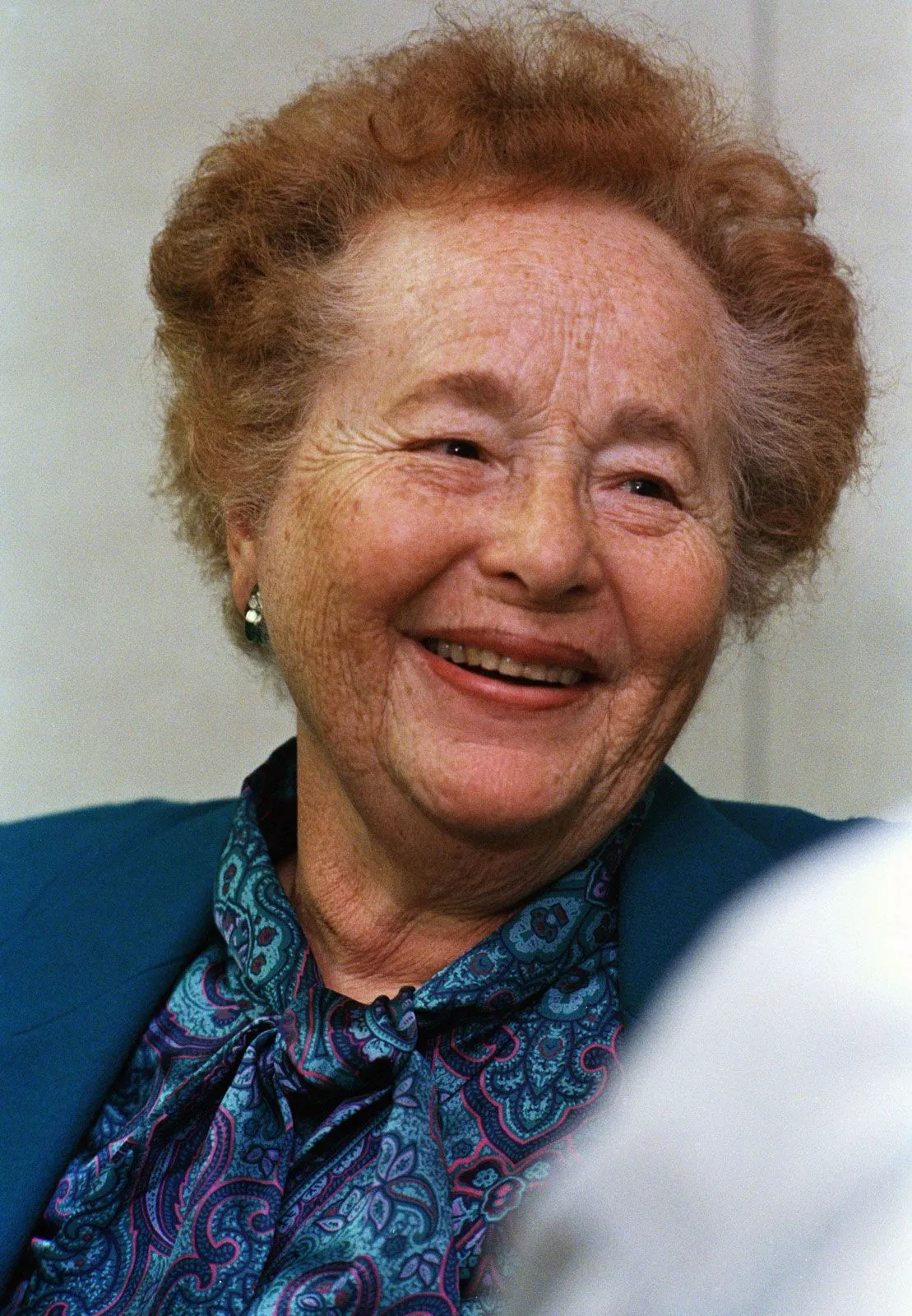 Photo: Gertrude Elion, via cdn.britannica.com
She didn't give up. And because she didn't, millions of people who never heard her name are alive today.
This is a story about what persistence looks like when the system isn't broken—when it's working exactly as designed, just against you.
The Girl Who Watched Her Grandfather Die
Gertrude Elion was fifteen when her grandfather died of stomach cancer. She was sitting next to him. She decided, right there, that she would spend her life fighting the disease that took him.
This is the kind of origin story that sounds constructed in retrospect, but by every account Elion gave throughout her life, it was genuine and it was specific. She wasn't drawn to science in a vague, curious way. She was drawn to it with a purpose that was almost uncomfortably clear for a teenager.
She graduated from Hunter College in New York City in 1937 with a chemistry degree, summa cum laude, at nineteen. She applied to graduate programs. She applied to laboratory positions. She was turned away from all of them.
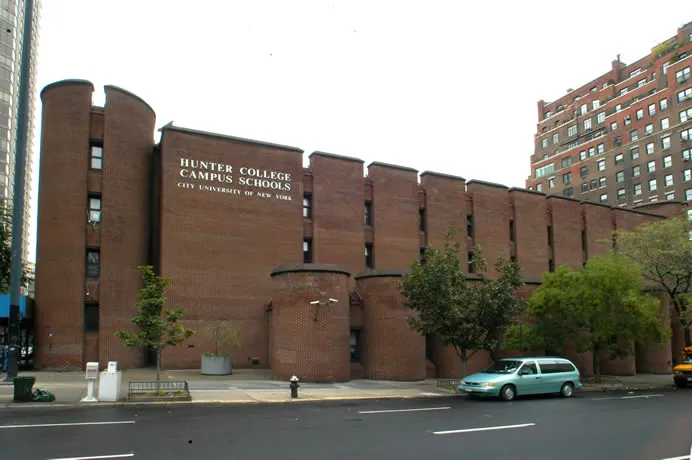 Photo: Hunter College, via assets.collegedunia.com
The reasons given were variations on a theme: the labs had never had a female research assistant before. The graduate programs felt that admitting women would be a distraction to the men. One program told her directly that the department wasn't in a position to take a chance on a woman that year.
She was not, by any measure, an undistinguished applicant. She was one of the best students her college had produced. It didn't matter.
The Pickle Jar Years
To stay financially afloat, Elion took the work she could get. She taught biochemistry to nursing students. She worked as a receptionist. Most memorably, she spent time as a food quality control analyst—testing the acidity of pickles, checking the color of egg yolks, evaluating the freshness of berries for a grocery chain.
She was not bitter about this, at least not in the way she described it later. She was practical. The work paid. And she kept applying.
What changed was the war.
When World War II pulled men out of research laboratories across the country, a scientist named George Hitchings at Burroughs Wellcome (now part of GlaxoSmithKline) found himself with an open position and a shrinking pool of candidates who fit the traditional profile. In 1944, he hired Elion—not as a stopgap, but because she was clearly exceptional. He gave her a bench, a problem to work on, and, crucially, the latitude to follow her thinking wherever it led.
She had no PhD. She never would get one—she started a part-time doctoral program at Brooklyn Polytechnic but eventually dropped out because Hitchings needed her full-time and she had to choose. For the rest of her career, in a field where credentials function as a kind of currency, she would operate without the one credential that mattered most to gatekeepers.
The Work That Changed Medicine
Elion and Hitchings were working on a problem that sounds simple and wasn't: could you design a drug that selectively attacked abnormal cells—cancer cells, bacterial cells, viral cells—without destroying healthy ones?
The conventional pharmaceutical approach of the era was largely trial and error. You found a compound that seemed to work, you tested it, you moved on. Elion and Hitchings wanted to understand why things worked, at the level of cellular chemistry, and use that understanding to design drugs intentionally.
This was not a popular approach. It was considered too theoretical, too slow, insufficiently practical. The scientific establishment was skeptical.
Elion didn't particularly care what the scientific establishment thought. She had been ignored by it for long enough that its opinion had lost some of its authority over her.
In 1951, she developed 6-mercaptopurine, a compound that interfered with the way leukemia cells replicated. When it was tested in children with acute leukemia—a disease that was, at the time, essentially a death sentence—it produced remissions. Not cures, not yet, but remissions. Children who should have died within weeks were alive months later.
The drug became a building block. Researchers built on it. Combined with other treatments, the approach Elion pioneered eventually pushed the survival rate for childhood acute lymphoblastic leukemia from near zero to above 80 percent.
She kept going. She developed allopurinol, which transformed the treatment of gout—a painful, debilitating condition that had resisted effective treatment for centuries. She developed azathioprine, an immunosuppressant that made kidney transplants viable by preventing the body from rejecting the new organ. Without that drug, the entire field of organ transplantation looks different.
Late in her career, she contributed to the development of acyclovir, the first effective antiviral treatment for herpes. The methodology she and her team used to develop it was later applied to AZT, the first drug approved to treat HIV.
The Nobel They Almost Didn't Give Her
In 1988, the Nobel Committee awarded the Prize in Physiology or Medicine to George Hitchings, Gertrude Elion, and Sir James Black for their contributions to the principles of drug treatment.
Elion was 70 years old.
She had spent the intervening decades being quietly, persistently overlooked. She had been passed over for positions, excluded from certain professional circles, and published in a field that had not always been eager to credit her contributions clearly. She had also, somewhere along the way, stopped needing the validation. The work was the work. The patients were the patients.
When reporters asked her what she thought about winning the Nobel, she was characteristically direct: she was glad the drugs existed. She was glad people were alive because of them. The prize was fine, but it wasn't really the point.
What the Gatekeepers Got Wrong
The graduate programs that turned Elion away in the 1930s were not, in their own framing, making an error. They were operating according to the norms of their time and institution. They were managing resources, managing optics, managing the comfort of their existing students and faculty.
What they were not doing was asking whether they were making a mistake about a specific person in front of them.
That distinction matters. The system that rejected Elion wasn't random—it was systematic, and it was systematically wrong about her. The cost of that wrongness was paid partly by Elion, in years of wasted potential and degrading work, and partly by patients who might have been helped sooner if she'd been given a laboratory bench a decade earlier.
The Long Odds Club doesn't exist to celebrate suffering. But it does exist to be honest about what the odds looked like from the inside—and Gertrude Elion, testing pickle acidity in 1938, was running about as long as they get.
She ran them anyway. The scoreboard, in the end, was not close.