Every American School Said No. Paris Said Yes. Then She Came Home and Rewrote Medicine.
Photo: Jason Tong from Sydney, Australia, CC BY 2.0, via Wikimedia Commons
Rejection, when it comes from enough directions at once, starts to feel like a verdict. Mary Putnam received that verdict from virtually every medical school in the United States, delivered with the particular confidence of institutions that had never once questioned their own assumptions.
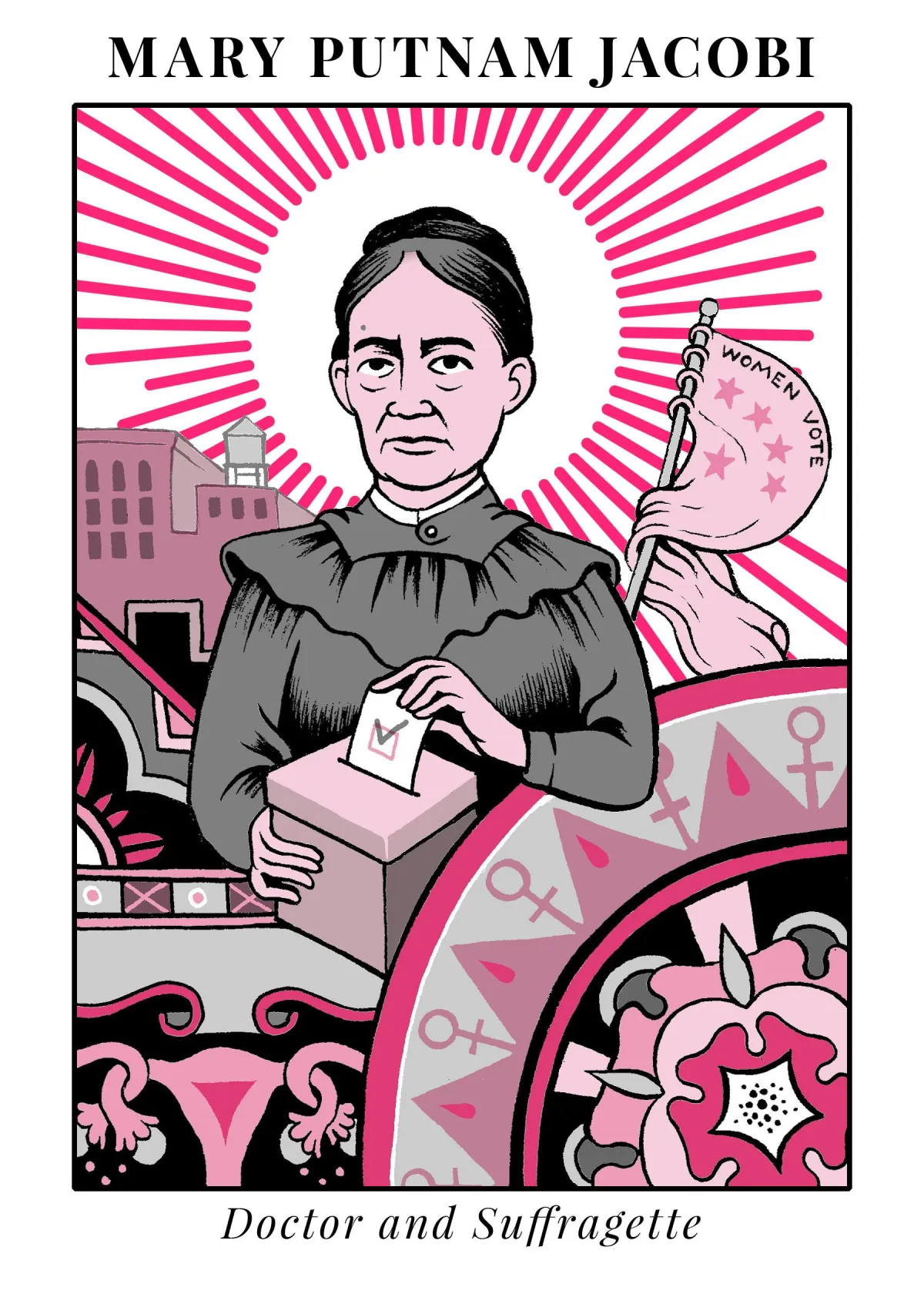 Photo: Mary Putnam, via images.takeshape.io
They were wrong about her. They were also, as it turned out, wrong about almost everything they believed concerning women's bodies.
The Doors That Wouldn't Open
Mary Putnam was the daughter of the publisher George Palmer Putnam — a household name in 19th-century American letters — which meant she grew up in a world where intellectual ambition was considered entirely normal. For men. She showed an early and serious interest in medicine, the kind that went beyond Victorian-era notions of nursing and caregiving into the hard, technical work of diagnosis and research.
She earned a pharmacy degree from the New York College of Pharmacy in 1863, becoming one of the first women to do so. Then she applied to medical schools. And applied. And applied again.
The rejections were consistent and, to the institutions delivering them, apparently self-evident. Women were not suited to the rigors of medical training. Their presence would disturb male students. The profession simply wasn't for them. These were not fringe positions — they were the mainstream consensus of American medical education in the 1860s, backed by the era's leading physicians and endorsed by its most respected institutions.
Putnam's response to this consensus was, in retrospect, exactly right. She stopped asking American schools for permission and started looking elsewhere.
Paris and the Next Impossible Door
In 1866, she sailed for France. Paris was, at the time, the center of the medical world — the École de Médecine was where serious science happened, where the best training existed, where the field was actually advancing. It also did not admit women.
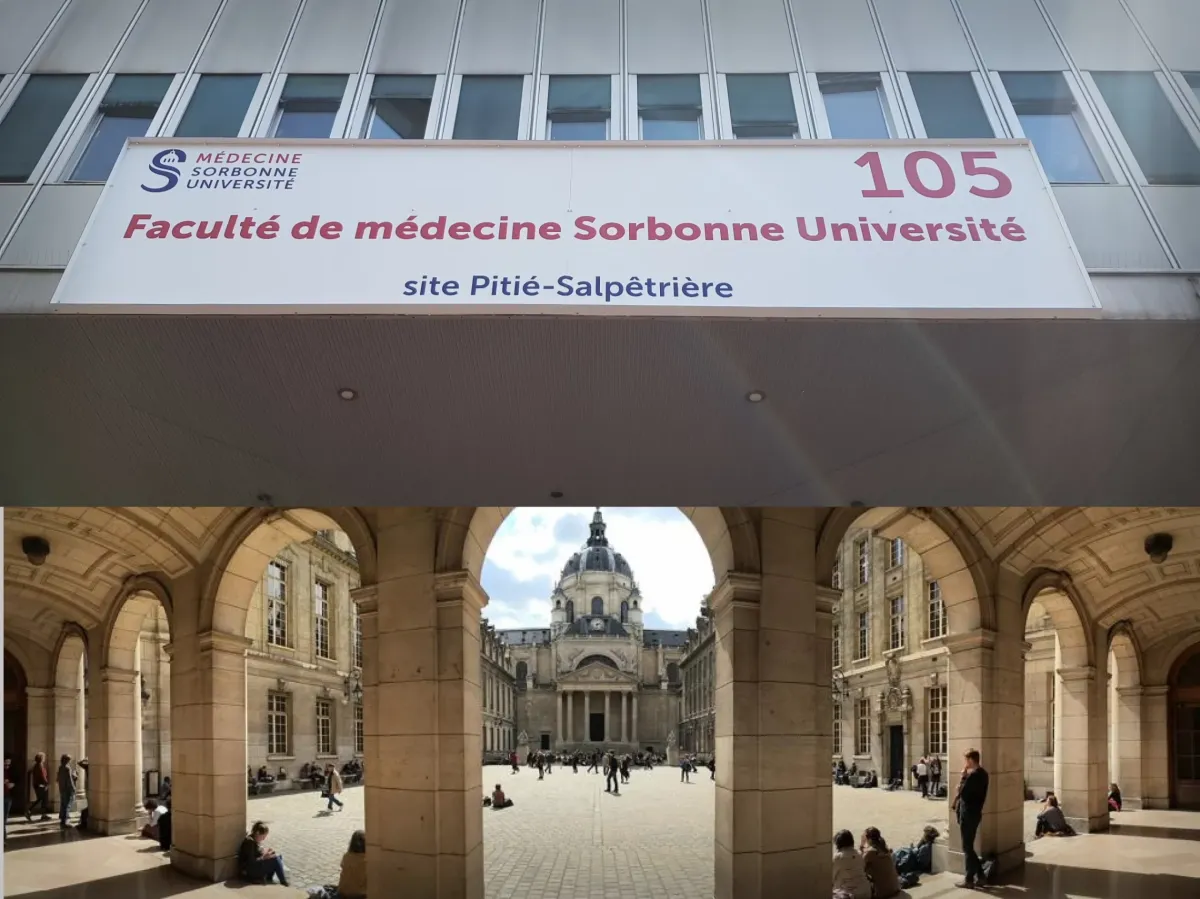 Photo: École de Médecine, via medibox.fr
Putnam applied anyway. The school deliberated. The faculty argued. The administration eventually, and apparently with some reluctance, agreed to let her in. She became the first woman ever admitted to the École de Médecine.
What followed was not a symbolic gesture. She didn't attend as a curiosity or a token. She studied with the rigor of someone who had been told her entire life that she didn't belong, and who had decided the most effective response was to become undeniable. She won prizes. She published research. She absorbed the French clinical tradition — empirical, systematic, skeptical of received wisdom — and made it her own.
She graduated in 1871 with a thesis that received high honors. Then she came home.
The Science That Dismantled a Myth
The medical consensus in 19th-century America held that menstruation was essentially a pathological state — that women's bodies were compromised during their cycles, that physical and intellectual exertion during menstruation was dangerous, and that this biological reality made women unsuitable for demanding professional or academic work. This wasn't a fringe theory. It was taught in medical schools, cited in textbooks, and used as scientific justification for keeping women out of universities, professions, and public life.
Putnam found it unconvincing. More importantly, she found it untested.
In 1876, she submitted an essay to Harvard's Boylston Prize competition — the most prestigious medical prize the university awarded. The essay was submitted anonymously, as the competition required. It presented original research on the physiology of menstruation, built on careful measurement and clinical observation, arguing systematically that the prevailing theory was not just wrong but empirically unsupported.
Harvard awarded her the prize. When the envelope was opened and her identity revealed, the committee's reaction was reportedly one of considerable surprise. The woman that American medical schools had collectively decided was unsuitable for serious training had just outperformed every male physician who entered the competition.
The research itself was the more lasting blow to the establishment. Putnam's work didn't just challenge the menstruation-as-illness theory — it provided the kind of rigorous, data-driven rebuttal that made the old consensus increasingly difficult to defend. Her findings became part of the scientific foundation for arguments that women could and should participate fully in professional and academic life.
What Rejection Actually Built
It's tempting to frame Putnam's story as a triumph-over-adversity narrative — the talented individual who overcame the system. That's accurate as far as it goes, but it misses something more structurally interesting.
The American medical schools that rejected her were not just being unjust. They were also, inadvertently, redirecting her toward better training than they could have offered. The École de Médecine in the 1860s was operating at a level of scientific rigor that most American medical schools hadn't yet reached. By closing their doors, those American institutions pushed Putnam toward the most demanding scientific environment in the world.
She returned with a standard of evidence and a methodological seriousness that made her research harder to dismiss — not because she was trying to prove something to the people who'd rejected her, but because she'd been trained in an environment where the science had to stand on its own.
The gatekeepers, in their determination to keep her out, had accidentally made her more formidable.
The Inheritance She Left Behind
Putnam went on to found the Association for the Advancement of the Medical Education of Women and spent decades training the next generation of female physicians. She published over 100 papers. She practiced medicine in New York until illness forced her to stop. She wrote her own case notes in the final months of her life, a last act of clinical observation turned on herself.
She died in 1906. The institutions that had refused her were, by then, slowly, reluctantly, beginning to change.
The lesson her life offers isn't simply that persistence pays off — though it does. It's that the quality of the obstacle shapes the quality of the outcome. Every door that closed in America sent Mary Putnam Jacobi somewhere harder, somewhere better, somewhere that demanded more of her than the institutions that said no ever could have. She walked through the doors that opened and came back carrying something the ones that had refused her couldn't match.
The long odds, in her case, were also the long route to the only credential that really mattered: work so good that even Harvard couldn't pretend not to notice.