God Handed Him a Chisel at 57. The Art World Never Saw It Coming.

There is a particular kind of freedom that comes from having nothing to lose and no one to impress. William Edmondson had both in abundance.
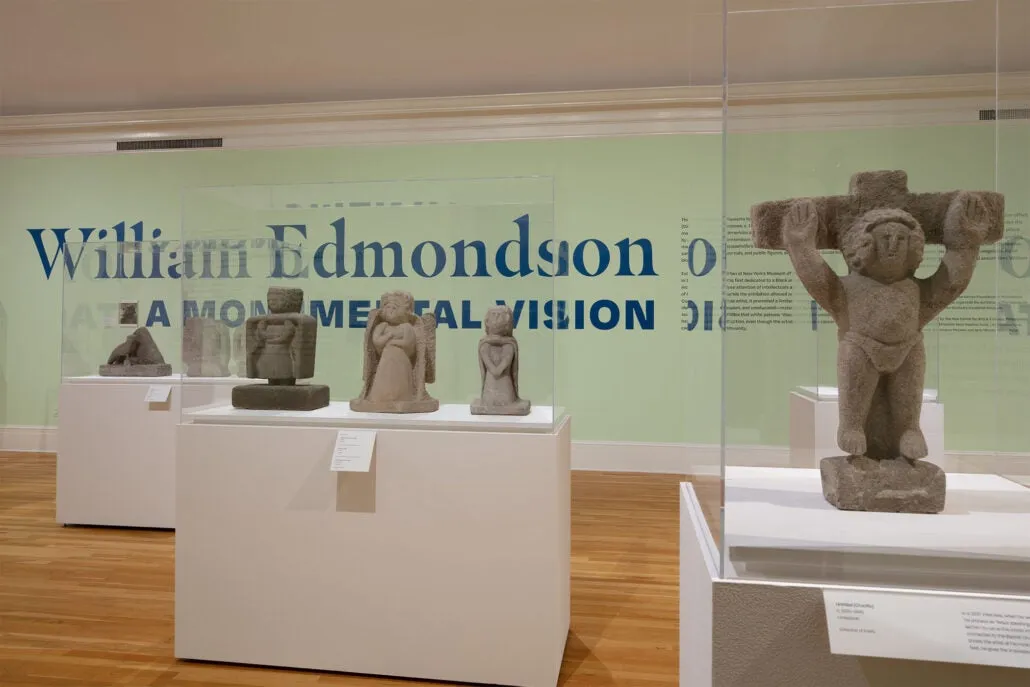 Photo: William Edmondson, via newcombartmuseum.tulane.edu
In the mid-1930s, Edmondson was a janitor at a Nashville women's hospital. Before that, he had collected garbage. Before that, he had worked the railroad. He was somewhere in his mid-to-late fifties — records from that era were unreliable for Black men born in rural Tennessee — and by every conventional measure, his story was already written. Steady work. Modest life. Invisible to history.
Then, by his own account, God spoke to him.
The Backyard Workshop Nobody Asked For
Edmondson later described the experience plainly, the way a man describes something he has no reason to embellish: a voice told him to pick up tools and carve. He found a discarded railroad spike, shaped it into a rough chisel, and started working on chunks of limestone he salvaged from demolished buildings and old curbstones being torn out of Nashville streets.
He had no training. He had no formal knowledge of sculpture, no understanding of art history, no access to galleries or mentors or the kinds of social networks that tend to shepherd raw talent toward recognition. He set up in his yard on Farrell Street and started cutting stone.
What came out of that limestone was unlike anything the American art world had produced — or thought to look for. Angels with blunt, powerful wings. Biblical figures with a compressed, monumental gravity. Animals that felt ancient and immediate at once. Preachers, nurses, horses, crucifixes — all rendered with a directness that no amount of formal schooling could have taught, because formal schooling would almost certainly have trained it out of him.
Edmondson called his subjects "miracles." He wasn't being metaphorical.
The Photographer Who Changed Everything
In 1936, a photographer named Louise Dahl-Wolfe was visiting Nashville when she stumbled across Edmondson's yard. She was a fashion photographer, not an art scout. But she recognized immediately that what she was looking at was extraordinary, and she started shooting.
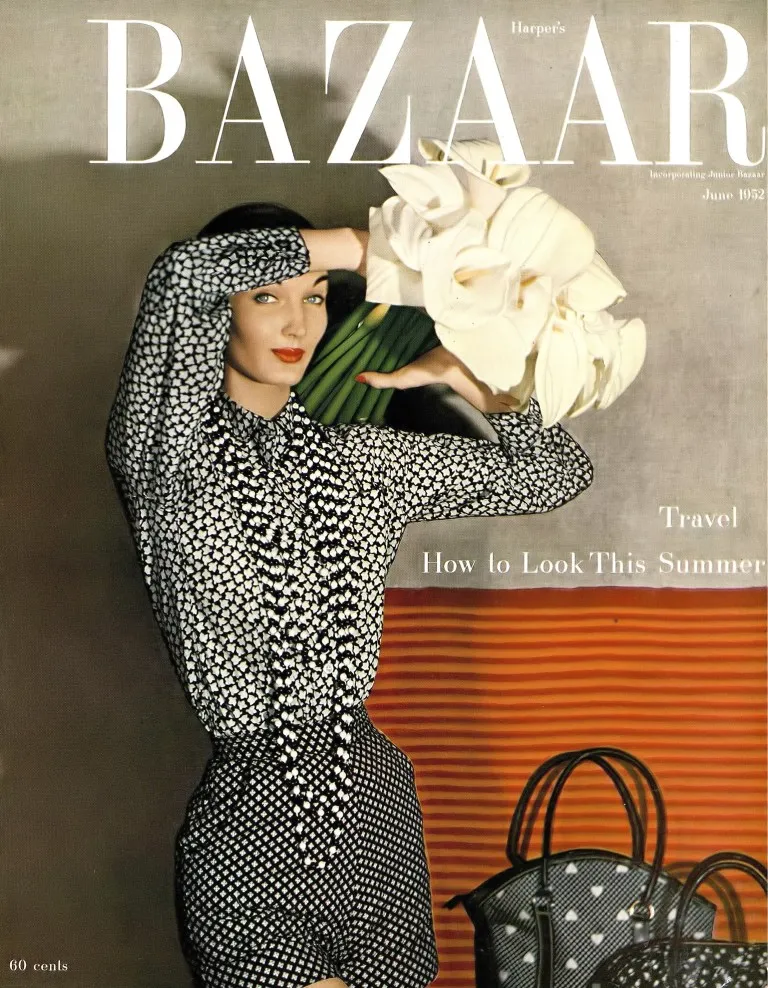 Photo: Louise Dahl-Wolfe, via pleasurephoto.wordpress.com
Those photographs eventually made their way to Alfred Barr, the founding director of the Museum of Modern Art in New York. Barr traveled to Nashville to see the work himself. What he found was a man who had been quietly producing one of the most original bodies of sculpture in the country, stacked in his yard, sold occasionally to neighbors for a few dollars, entirely outside any established system of value or recognition.
In 1937, MoMA gave William Edmondson a solo exhibition. He was the first Black artist in the museum's history to receive one.
The art world, to its credit, was genuinely stunned. To its shame, it had taken this long.
What the Gatekeepers Almost Missed
There's a version of this story where Edmondson's outsider status is framed as a charming accident — the untrained visionary discovered by the right person at the right moment. That framing is too comfortable. It lets the institutions off the hook.
The truth is more interesting. Edmondson's lack of formal training wasn't incidental to his genius — it was structurally connected to it. He never learned what sculpture was "supposed" to look like. He never absorbed the hierarchies of subject matter that governed academic art. He had no reason to make his work legible to critics or collectors, so he made it legible to something else entirely: his own interior vision, rooted in Black Southern religious life, in the landscape of Tennessee, in the specific textures of a working man's existence.
The gatekeepers of the American art world in the 1930s were not, by and large, looking for that. Their networks ran through New York studios and European training programs and wealthy collectors' drawing rooms. Edmondson existed so far outside those networks that he was effectively invisible — right up until the moment he wasn't.
What Dahl-Wolfe and Barr recognized was not just technical skill. It was a completely uncontaminated artistic voice. And the reason that voice was uncontaminated was precisely because no institution had ever let Edmondson through its doors.
The Long Silence After the Spotlight
The MoMA exhibition brought Edmondson brief, bright recognition. He was written about, photographed, celebrated. And then, as happens so often with artists who arrive outside the system, the spotlight moved on.
He kept carving. He kept selling pieces for modest sums to Nashville neighbors who wanted angels for their yards and grave markers for their families. He died in 1951, largely forgotten by the national art world that had briefly celebrated him.
The reassessment came slowly. Today, his work is held by major museums across the country. A limestone carving that might have sold for a few dollars in his lifetime now commands prices that would have seemed incomprehensible to the man who made it.
But the more important legacy isn't the auction records. It's what Edmondson's story tells us about where original work actually comes from. Not from the institutions that claim to produce it. Not from the credentialed pathways that promise to develop it. Sometimes it comes from a backyard in Nashville, from a man with a salvaged railroad spike and a very clear sense of what he'd been told to do.
The long odds, in his case, turned out to be an asset. The art world's closed doors meant he never had to learn how to make work that pleased them. He only ever had to please the voice he heard in his yard.
That turned out to be enough.