The Country Lawyer Who Outlawyered Everyone: How Clarence Darrow Became America's Courtroom Legend

The Unlikely Beginning
In 1878, Clarence Darrow was just another small-town Ohio boy with big-city dreams and no clear path to achieve them. He'd dropped out of Allegheny College after one year—not because he wasn't smart enough, but because his family couldn't afford the tuition. His single year at University of Michigan Law School was more of a formality than an education; he spent most of his time reading philosophy and literature instead of legal texts.
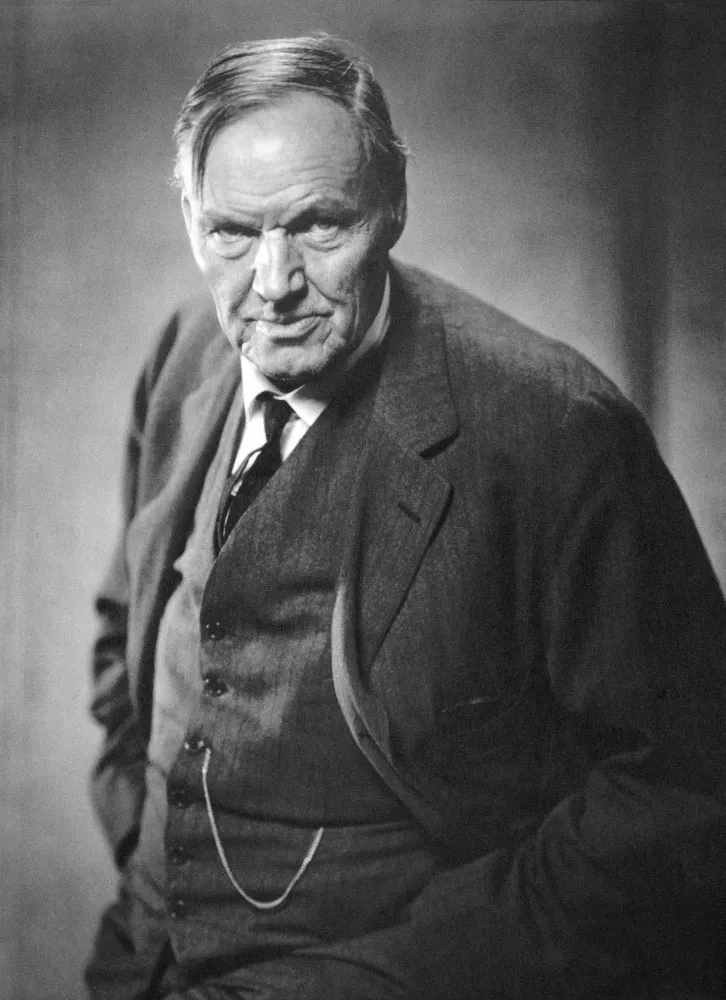 Photo: Clarence Darrow, via cdn11.bigcommerce.com
When Darrow arrived in Chicago in 1887 with $100 in his pocket and a freshly minted law degree, he looked nothing like the polished attorneys who dominated the city's legal establishment. He was tall and rumpled, with unruly hair and clothes that never quite fit right. The Ivy League lawyers who ran Chicago's biggest firms took one look at this country bumpkin and dismissed him entirely.
They had no idea they were looking at the man who would revolutionize American jurisprudence.
Learning by Losing
Darrow's early years in Chicago were a masterclass in learning through failure. He took whatever cases he could get—divorce proceedings, petty theft, landlord disputes—and lost most of them. But each defeat taught him something the law schools never could: how to connect with ordinary people who found themselves trapped in a system designed by and for the elite.
While his better-credentialed competitors relied on legal precedent and procedural technicalities, Darrow was developing something far more powerful: the ability to tell a story that juries wanted to believe. He understood that most legal cases weren't really about law—they were about human nature, economic inequality, and the eternal struggle between the powerful and the powerless.
The Labor Wars
Darrow's breakthrough came in 1894 when he agreed to defend Eugene Debs, the leader of the American Railway Union, who was facing federal charges for organizing a strike against the Pullman Company. It was a case no respectable lawyer would touch—Debs was being portrayed as a dangerous radical threatening the American way of life.
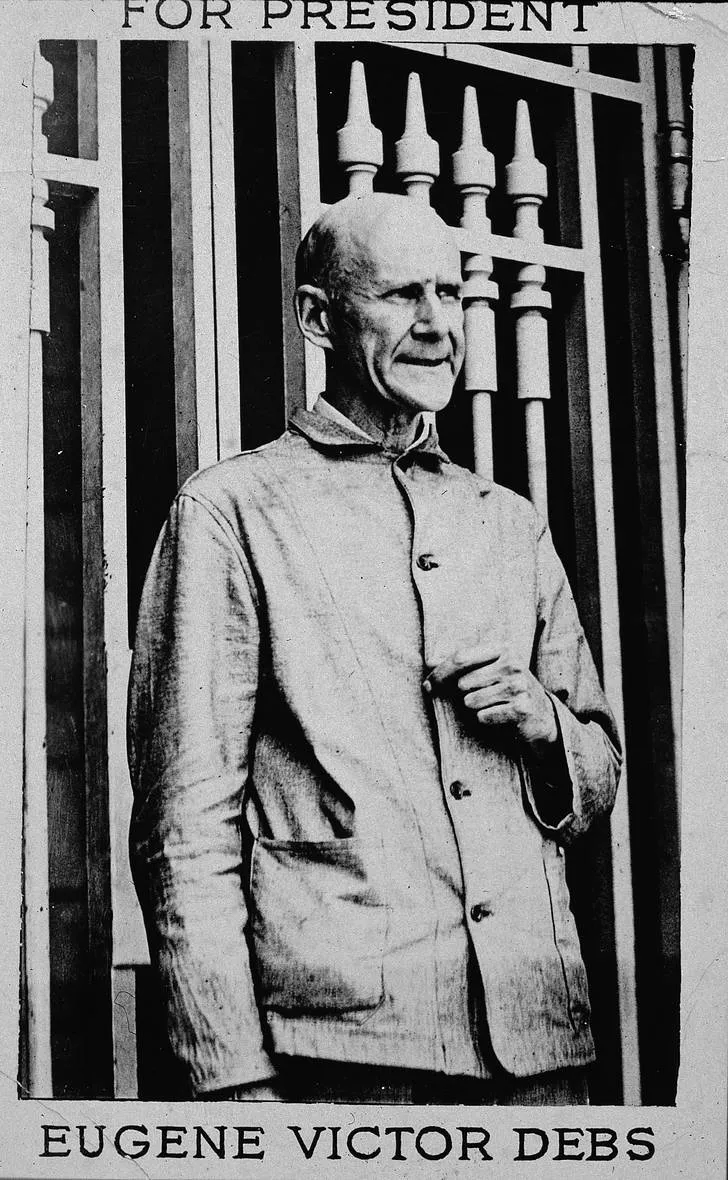 Photo: Eugene Debs, via images2.minutemediacdn.com
But Darrow saw something else: a working man fighting for fair wages against a company that paid its workers in company scrip and housed them in company towns. In court, he didn't just defend Debs' legal right to organize—he put the entire economic system on trial, arguing that the real criminals were the industrialists who treated workers like disposable machinery.
Although Debs was ultimately convicted, Darrow's defense made him a national figure. More importantly, it established his reputation as the lawyer who would take on the cases that others wouldn't touch.
The Philosophy of Defense
What set Darrow apart wasn't just his willingness to represent unpopular clients—it was his fundamental belief that the legal system was rigged against ordinary people. He approached every case as a battle between individual humanity and institutional power, whether that power came from corporations, government, or social convention.
This philosophy led him to develop courtroom strategies that seemed radical at the time but would become standard practice. He was one of the first lawyers to use psychiatric testimony to explain criminal behavior. He pioneered the use of social and economic context in criminal defense. Most famously, he turned cross-examination into a form of theater, using his questioning to expose the prejudices and assumptions of hostile witnesses.
The Scopes "Monkey" Trial
Darrow's most famous case came in 1925, when he agreed to defend John Scopes, a Tennessee teacher charged with violating the state's ban on teaching evolution. The case pitted Darrow against William Jennings Bryan, the three-time presidential candidate and fundamentalist Christian leader who was serving as a special prosecutor.
On paper, it looked like a mismatch—Bryan was one of the most famous orators in American history, while Darrow was just a criminal defense lawyer from Chicago. But Darrow understood something Bryan didn't: this wasn't really a case about one teacher's violation of state law. It was a case about the right to think freely in America.
In one of the most dramatic moments in legal history, Darrow called Bryan himself as a witness and proceeded to systematically dismantle his literal interpretation of the Bible. For two hours in the sweltering Tennessee heat, Darrow exposed the contradictions and impossibilities in Bryan's fundamentalist beliefs, turning the prosecution's star witness into an object of ridicule.
Scopes was convicted—the law was clear—but Darrow had won something more important: the battle for public opinion. The trial made fundamentalism look backward and anti-intellectual, while positioning scientific education as essential to American progress.
The Art of Jury Selection
Darrow's real genius lay in his ability to read people. He could look at a potential juror and instantly assess their prejudices, fears, and sympathies. He developed techniques for jury selection that lawyers still use today, looking for subtle cues about a person's background and beliefs that might influence their verdict.
He famously said he never wanted a wealthy man on a jury because "wealth hardens the heart." He preferred immigrants, workers, and anyone who had experienced hardship personally. He understood that justice wasn't an abstract concept—it was something that emerged from the life experiences of twelve ordinary people trying to make sense of a complex situation.
The Underdog's Advocate
Throughout his career, Darrow took on cases that other lawyers considered hopeless. He defended labor organizers during the height of anti-union sentiment. He represented African Americans in the segregated South. He fought for the rights of political radicals during the Red Scare. In almost every case, he was representing someone society had already written off.
But Darrow's success wasn't just about picking the right side of history—it was about his ability to make juries see his clients as human beings rather than categories. He had a gift for finding the universal humanity in people that society wanted to dismiss as dangerous, different, or disposable.
The Self-Made Expert
What's remarkable about Darrow's career is how little of his success came from formal legal training. His single year of law school taught him the basics of procedure and precedent, but everything that made him great—his understanding of human nature, his ability to construct compelling narratives, his skill at reading juries—he developed through experience and natural talent.
He was an autodidact who read voraciously, not just legal texts but philosophy, literature, and social theory. This broad education gave him perspectives that his more narrowly trained competitors lacked. While they saw legal problems, he saw human problems that happened to involve the law.
The Legacy of the Outsider
Darrow's career spanned more than fifty years and included some of the most important legal cases in American history. He saved more than a hundred clients from the death penalty. He helped establish the right to organize labor unions. He defended the teaching of evolution in public schools. He fought for the rights of political dissidents and racial minorities decades before these became mainstream causes.
But perhaps his greatest contribution was proving that the law belonged to everyone, not just the elite. The country boy who barely finished law school showed that legal expertise could come from understanding people rather than memorizing statutes. He proved that sometimes the best way to master a system is to approach it from the outside, unencumbered by assumptions about how things are supposed to work.
The Courtroom as Theater
Darrow understood something that many lawyers miss: trials are fundamentally dramatic performances. The side that tells the most compelling story usually wins, regardless of the technical merits of their legal arguments. This insight led him to develop a theatrical style that made him one of the most effective trial lawyers in history.
He would pace the courtroom like an actor on stage, using his physical presence to emphasize key points. He had a gift for the memorable phrase that would stick with jurors long after the technical arguments were forgotten. Most importantly, he understood that emotion was often more persuasive than logic—people make decisions with their hearts and then use their heads to justify them.
The rumpled country lawyer who arrived in Chicago with nothing but ambition and a distrust of authority became the most famous attorney in American history. His story proves that sometimes the best preparation for challenging a system is growing up outside it, unimpressed by its pretensions and unafraid of its power.