Wanted Man, Unstoppable Voice: How a Fugitive Built America's Most Powerful Pulpit
Wanted Man, Unstoppable Voice: How a Fugitive Built America's Most Powerful Pulpit
There's a particular kind of audacity in standing on a public stage, giving your real name, describing exactly what was done to you, and knowing that somewhere out there, a man holds legal papers proving he owns you.
That was Frederick Douglass's reality for the first several years of his public life. He wasn't speaking from safety. He was speaking from exposure—and he did it anyway, over and over, in packed halls across New England, across Britain, across a country that couldn't quite decide what to do with him.
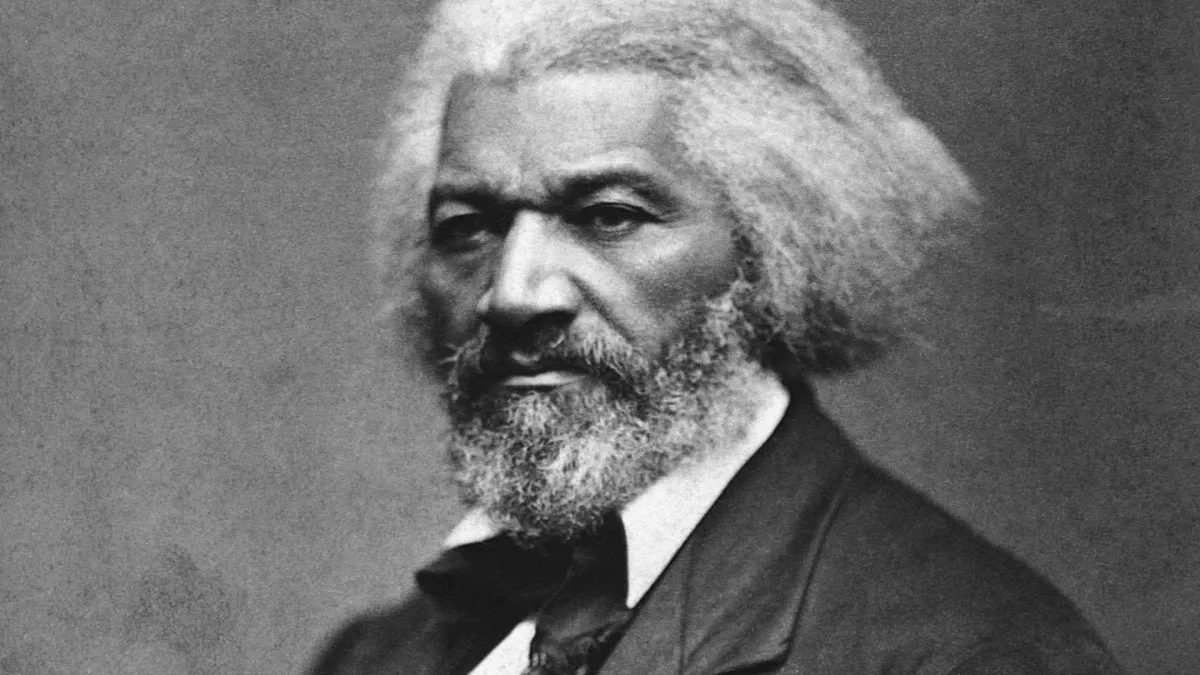 Photo: Frederick Douglass, via assets.editorial.aetnd.com
The Long Odds Club exists to find people who beat the house. Douglass didn't just beat it. He burned it down and built something better on the ashes.
The Borrowed Name, the Borrowed Papers
In September 1838, a man named Frederick Bailey—enslaved since birth on Maryland's Eastern Shore—boarded a train in Baltimore dressed in a sailor's uniform, carrying identification papers that didn't belong to him. The papers described a free Black seaman. Bailey didn't match the physical description particularly well. He had roughly two minutes at the checkpoint to sell the performance.
He sold it.
Within twenty-four hours, he was in New York. Within days, he was in New Bedford, Massachusetts, living under a new name borrowed from a character in a Walter Scott poem: Douglass. Frederick Douglass. He was twenty years old, owned nothing, knew almost no one, and was still the legal property of a man named Thomas Auld.
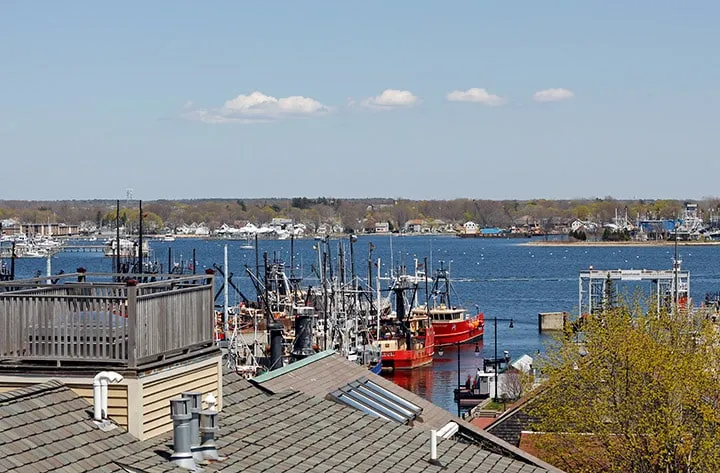 Photo: New Bedford, Massachusetts, via newengland.com
The financial math of that situation was brutal in ways that are easy to underestimate today. Douglass couldn't simply disappear into anonymity and build a quiet life. The Fugitive Slave Act meant that even in free states, he could be seized and returned south at any time. Every day of visibility was a day of legal risk. Every public speech was a potential advertisement to bounty hunters.
And yet, within three years, he was speaking publicly. Within five, he was the most recognizable Black voice in American abolitionism. The calculus he was running wasn't reckless—it was deliberate. Silence was its own kind of death.
The Media Business Nobody Expected
In 1845, Douglass published his first autobiography. His friends in the abolitionist movement were horrified. The book named names. It named places. It gave dates. It was, in effect, a detailed map for anyone who wanted to track him down and collect a reward.
It was also a bestseller.
The Narrative of the Life of Frederick Douglass sold 30,000 copies in its first five years—extraordinary numbers for the era. It was translated into multiple European languages. It went through eleven American editions. For a man with no formal education, no publishing connections, and no institutional backing, it was an act of entrepreneurial genius dressed up as autobiography.
The book made him famous enough that staying in America became genuinely dangerous. He sailed for Britain, spent two years lecturing to enormous crowds, and returned only after British supporters had purchased his freedom outright—paying Thomas Auld $711.66 for the legal title to a man who had already become an international figure.
With that money and his lecture fees, Douglass did something that surprised everyone in the abolitionist establishment: he started a newspaper.
The North Star, launched in Rochester, New York in 1847, was not supposed to work. William Lloyd Garrison—the most prominent white abolitionist in America—actively opposed it, convinced that Douglass was spreading resources too thin and that a Black-owned press couldn't survive. Garrison was wrong on both counts. The paper ran for sixteen years, merged with other publications, and became Frederick Douglass' Paper—a genuine media enterprise built, operated, and edited by a man who had been legally prohibited from learning to read fifteen years earlier.
The business model was precarious, constantly subsidized by lecture fees and donations, but it survived. More importantly, it gave Douglass something Garrison's operation never could: editorial independence. He could say what he actually thought, not what the white abolitionist movement found strategically convenient.
The Presidential Access Nobody Saw Coming
By the time the Civil War arrived, Douglass had been in the public eye for two decades. He had survived assassination threats, a mob attack in Indiana that broke his hand, and the constant low-grade terror of operating as a high-profile fugitive. He had also, quietly, become someone that powerful people wanted to talk to.
He met Abraham Lincoln three times. The first meeting, in 1863, was initiated by Douglass himself, who showed up at the White House to argue for equal pay and equal treatment for Black Union soldiers. Lincoln kept him waiting for hours—the room was full of white politicians—and then, when Douglass's turn finally came, greeted him by name, found him a seat, and talked with him for an hour.
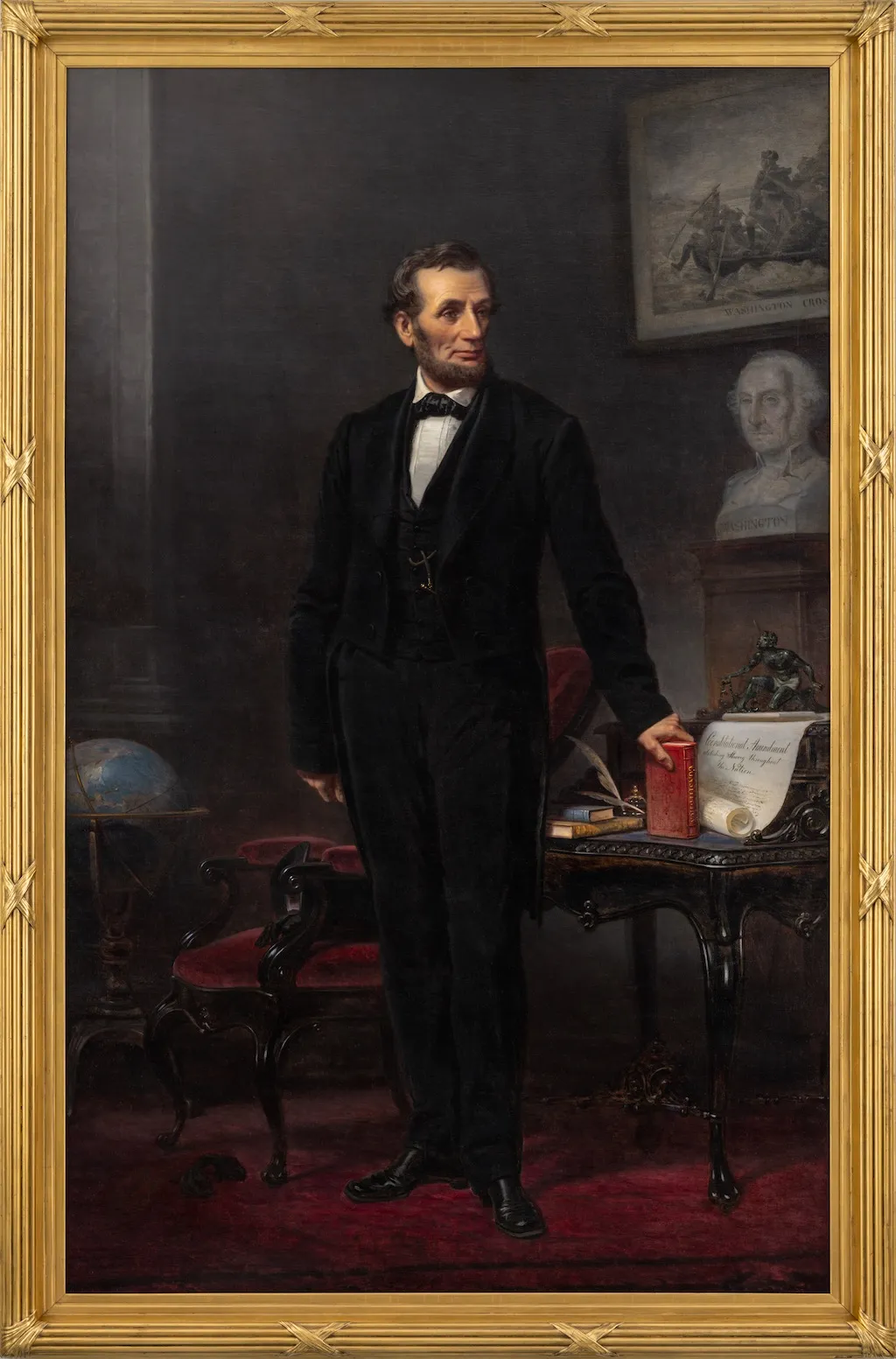 Photo: Abraham Lincoln, via www.washingtonian.com
Lincoln later told a friend that Douglass was one of the most impressive men he had met. Douglass, for his part, was characteristically unsentimental: he thought Lincoln moved too slowly, compromised too readily, and needed constant pressure to do the right thing. He applied that pressure anyway, because he understood that access to power was a tool, not a reward.
After the war, he held appointed positions under multiple administrations—U.S. Marshal for the District of Columbia, Recorder of Deeds, U.S. Minister to Haiti. He was the first Black American nominated for Vice President, placed on the Equal Rights Party ticket in 1872 without his knowledge or consent (he declined to campaign). He advised, argued with, and outlasted presidents from Lincoln to Grover Cleveland.
What the Odds Actually Were
It's tempting to tell this story as a straight line from bondage to triumph, but the Long Odds Club is in the business of being honest about the math.
The odds against Douglass at every stage were not merely long—they were, by any reasonable calculation, nearly prohibitive. The literacy he taught himself as a child was illegal. The escape he engineered in 1838 succeeded partly through skill and partly through luck; thousands of others who attempted similar escapes were caught, beaten, or killed. The public career he built existed in a country where the Supreme Court would rule, in 1857, that Black Americans had no rights a white man was bound to respect.
He built a media company without capital, without access to banks, without legal standing in half the country. He built a political career without the right to vote. He built a reputation as the most compelling orator of his era in a society that had tried, systematically and violently, to ensure he would never speak at all.
The thing his enslavers feared most—a Black man who could articulate, precisely and publicly, what slavery actually was—turned out to be exactly the thing they couldn't stop.
Sometimes the longest odds are the ones your opponents set for you. Douglass understood that the only way to beat them was to keep talking.