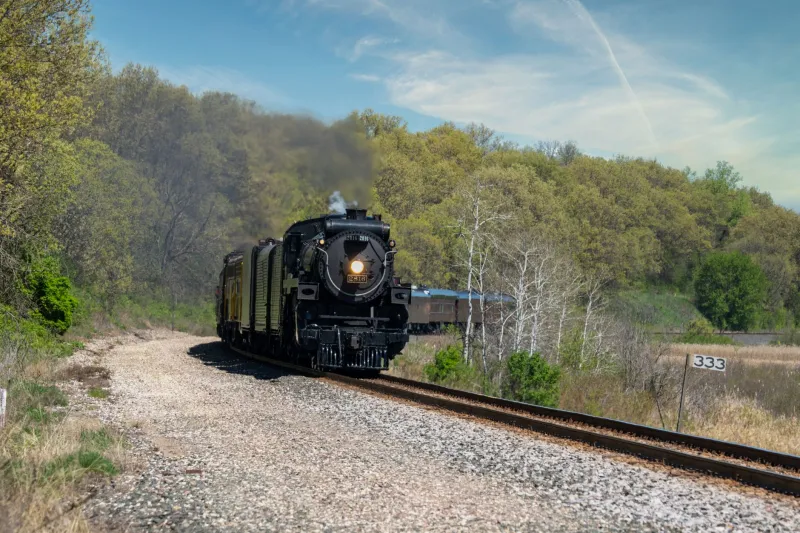
The General Everyone Underestimated Moved More Supplies Than Anyone Thought Possible — and Won the War Doing It
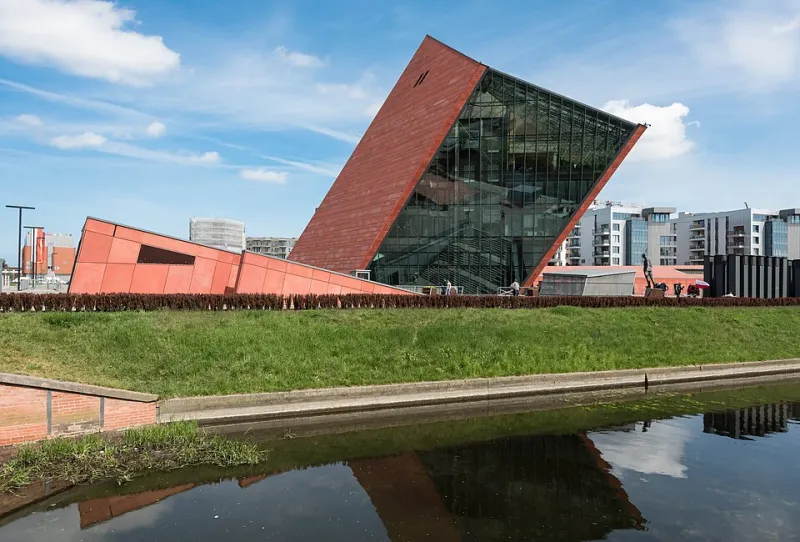
Photo: Adrian Grycuk, CC BY 3.0 pl, via Wikimedia Commons
War produces its heroes in predictable shapes. The battlefield commander. The strategic visionary. The pilot with the impossible kill count. These are the figures history tends to remember, because they map cleanly onto the stories we already know how to tell.
Brehon Somervell doesn't fit any of those shapes. He was a logistics officer. And he arguably did more to determine the outcome of World War II than almost any general whose name you actually know.
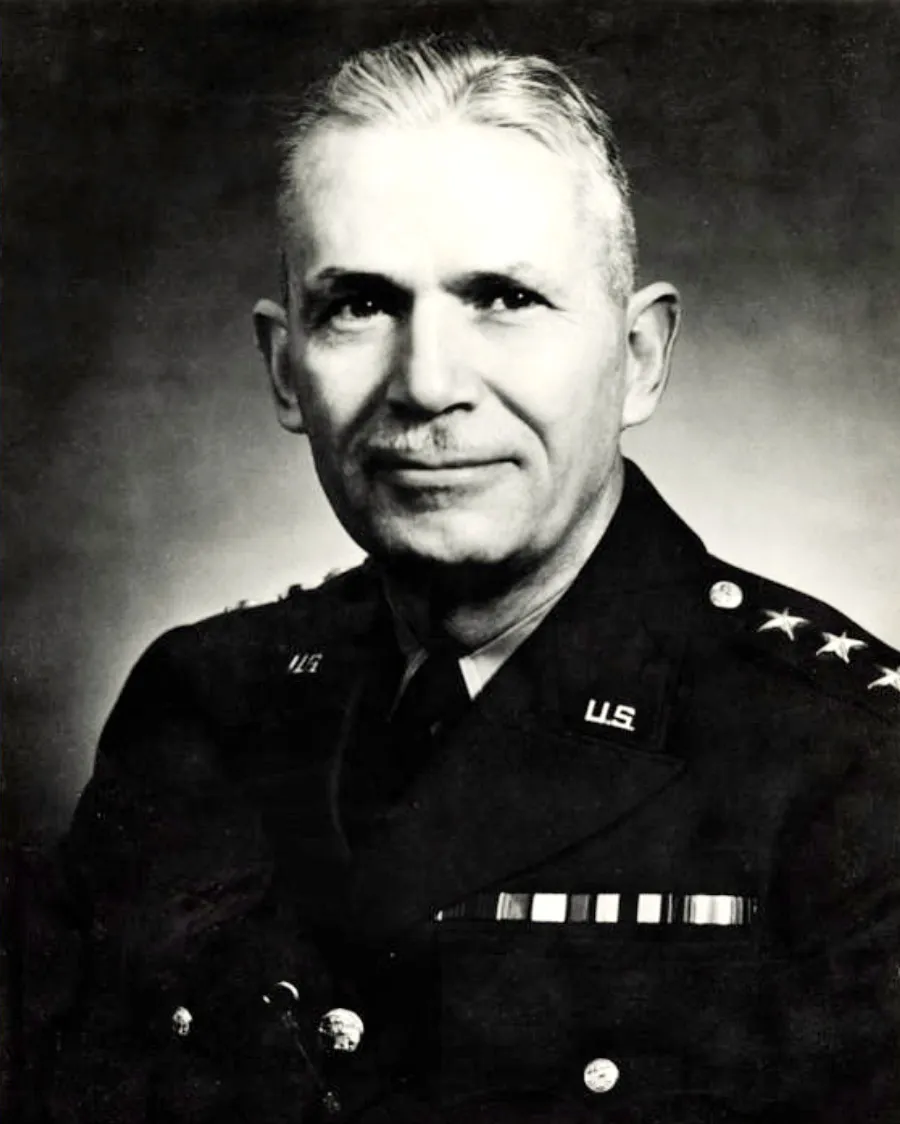 Photo: Brehon Somervell, via encyclopediaofarkansas.net
The Officer Nobody Was Watching
Somervell graduated from West Point in 1914, which should have been the beginning of a distinguished military career. Instead, it was the beginning of a long, unremarkable middle passage — the kind of career that accumulates assignments rather than achievements, that moves sideways more than upward, that exists in the institutional memory of the Army as a series of adequately completed tasks.
He was considered difficult. Abrasive. He had a talent for bureaucratic combat that his superiors found exhausting and his peers found threatening. He wasn't the kind of officer who inspired loyalty through charisma — he inspired it, when he inspired it at all, through sheer organizational pressure. He got things done, but not in ways that made people feel good about the process.
The Army, like most large institutions, tends to promote people who make the machinery run smoothly and comfortably. Somervell made the machinery run, but comfort wasn't really his priority. He spent years being shuffled between assignments that kept him busy without putting him anywhere near the center of things.
What nobody noticed — or nobody thought to value — was that all of those assignments were teaching him something specific and rare: how to move large quantities of material through complex, resistant systems. How to build supply chains in hostile environments. How to look at a logistical problem the size of a continent and find the throughput.
In peacetime, that skill set is moderately useful. In a global war fought across multiple oceans and several continents simultaneously, it is everything.
The Pentagon and the Problem
Before the war, Somervell got his first major test in an unexpected venue: New York City. As Works Progress Administration director for New York, he oversaw construction projects of staggering complexity, coordinating labor, materials, and competing political interests in a city that made military bureaucracy look simple. He built parks, airports, and public infrastructure at a pace that impressed even his critics.
Then, in 1941, he oversaw the construction of the Pentagon. The building that would become the nerve center of American military power was designed and built in sixteen months. That timeline still seems improbable. At the time, it was considered almost physically impossible.
Somervell made it happen by treating impossibility as an engineering problem rather than a verdict.
When the United States entered World War II, Army Chief of Staff George Marshall needed someone to run the Army Service Forces — the organization responsible for supplying, equipping, and moving every American soldier on every front in every theater of the war. It was, in terms of sheer operational complexity, the largest logistical challenge in human history. Marshall gave the job to Somervell.
Moving Mountains, Literally
The scale of what the Army Service Forces managed under Somervell is difficult to hold in the mind all at once. Consider just the numbers surrounding a single operation: the D-Day landings at Normandy in June 1944 required the movement of approximately 156,000 troops across the English Channel in a single day, supported by 11,000 aircraft, nearly 7,000 naval vessels, and quantities of fuel, ammunition, food, medical supplies, and equipment that ran into the millions of tons.
None of that happens without someone having spent years building the supply chain to support it. The ships had to be loaded in the right order so they could be unloaded in the right order. The fuel depots had to be positioned and stocked before the tanks needed fuel. The ammunition had to arrive before the guns needed ammunition. The food and medical supplies had to flow continuously through a system that was, by its nature, operating under constant disruption.
Somervell built that system. Not alone — there were thousands of officers and logisticians working within it — but he designed the architecture, set the priorities, and pushed the whole operation forward with the same blunt, exhausting force that had made him so difficult to work with in peacetime.
His approach wasn't elegant. It was relentless. He had a particular gift for identifying where a supply chain was going to break before it broke, and for applying exactly enough pressure at exactly the right point to keep it moving. In an organization the size of the wartime U.S. Army, that skill was worth more than almost any other.
The Invisible Architecture of Victory
There's a reason Somervell's name doesn't appear in most popular histories of World War II. Logistics doesn't photograph well. There are no dramatic moments, no single decisions that turn the tide in an afternoon. The work is cumulative, structural, invisible in the way that all good infrastructure is invisible — you only notice it when it fails.
Somervell's supply chain didn't fail. That's the whole story, and it's a story that's almost impossible to tell in a way that captures what it actually meant. The Allied forces landed at Normandy and kept moving because the fuel was there. They pushed through France and into Germany because the ammunition was there. Soldiers were fed and treated and re-equipped because someone had built the systems to make that happen, months and years before the first boot hit the beach.
The generals who led those soldiers into battle got the headlines. The general who made sure they had what they needed to fight got a footnote.
What the Army Almost Didn't Know It Had
The deeper lesson of Somervell's career isn't just about logistics. It's about what institutions miss when they only reward the skills they already know how to recognize.
For two decades, the Army had Somervell and didn't quite know what to do with him. He was too difficult for comfortable promotion, too focused on operational detail to fit the profile of the charismatic field commander, too interested in systems and throughput to seem like leadership material in the traditional sense. He existed in the organization's blind spot.
Then history changed the requirements. Suddenly, the most important military problem in the world was not how to inspire troops to charge a hill. It was how to move millions of tons of material across three thousand miles of ocean and then another thousand miles of contested European territory, continuously, without breaking down.
The Army had exactly one general who had spent his entire career learning how to do that. They'd just never thought to promote him for it.
Somervell retired in 1946 with four stars and a Distinguished Service Medal. He went into private industry, where his organizational gifts translated predictably well. He died in 1955.
The supply chain he built outlasted him. The victory it made possible outlasted everything. The long odds, in his case, were simply the odds that history would ever need precisely the skills everyone had been undervaluing. It did. He was ready.