The Ground Shook. Nobody Listened. Then It Happened Exactly Like She Said.
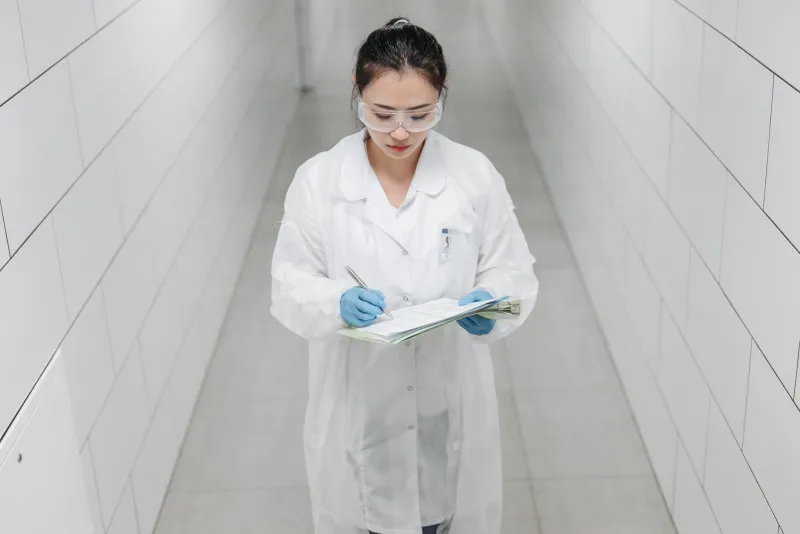
Lucia Ferreira spent her childhood doing homework in a supply closet.
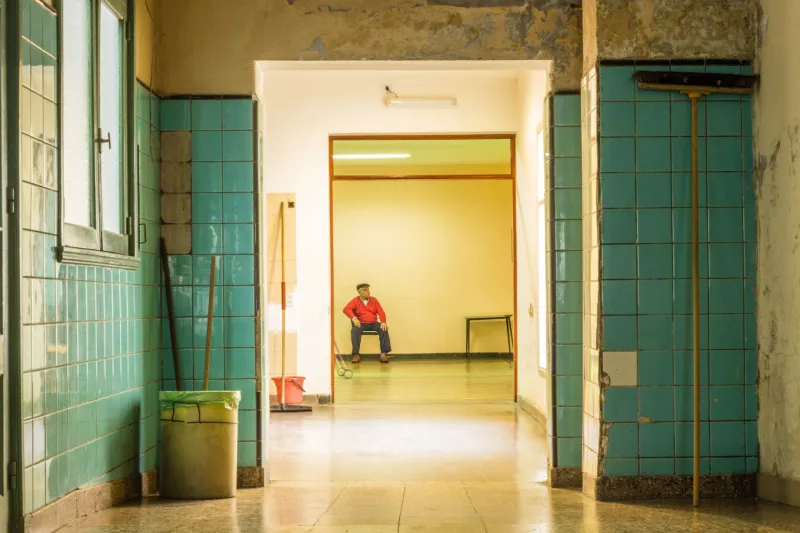
Not because she was being punished. Because her father, Ernesto, worked the evening janitorial shift at a mid-sized state university in central California, and the supply closet off the geology department hallway was warm, well-lit, and out of the way. While professors packed up their briefcases and headed home, a girl with a spiral notebook sat cross-legged on an overturned bucket, reading whatever textbooks she could borrow from the shelves outside.
She wasn't supposed to be there. She also wasn't supposed to end up being one of the most consequential voices in American earthquake science. But that's the thing about long odds — they don't much care what's supposed to happen.
A Degree Nobody Handed Her
Ferreira was the first in her family to attend college, earning a partial scholarship to study earth sciences at the same institution where her father had worked for twenty-two years. She wasn't a legacy admit. She didn't have a benefactor. What she had was an almost unreasonable amount of time spent absorbing the ambient knowledge of a geology department — the conversations in hallways, the papers left on desks, the arguments between graduate students about fault-line behavior that drifted through the vents.
She graduated near the top of her class, but the academic path forward was narrow and expensive, and her applications to doctoral programs were met with the particular kind of silence that institutions reserve for candidates they don't quite know what to do with. One rejection letter, she later recalled, praised her academic record while noting that her "proposed research direction" didn't align with departmental priorities.
Her proposed direction? Using non-traditional data sources — groundwater fluctuations, radon gas emissions, and micro-seismic clustering patterns — to build predictive models for significant seismic events. In the early 2000s, this was not considered serious science. The established view held that earthquake prediction was, for all practical purposes, impossible. Ferreira thought that was a conclusion people had reached too quickly.
The Unconventional Method
Unable to secure a traditional academic post, Ferreira spent several years working for a small environmental monitoring firm in the Central Valley, the kind of place that tracked soil contamination and water table changes for agricultural clients. It wasn't glamorous. But it gave her something most seismologists didn't have: years of granular, hyperlocal data about what the ground was doing when nothing dramatic was happening.
She started noticing patterns. Subtle pressure changes in well water. Anomalous radon readings in the weeks before minor seismic activity. Micro-tremor clusters that preceded larger events by intervals that felt, to her at least, non-random. She began building her own models on nights and weekends, cross-referencing her employer's environmental data against historical seismic records going back decades.
The methodology was unconventional enough that when she eventually published her preliminary findings in a smaller regional journal, the response from the broader seismological community was somewhere between polite dismissal and open skepticism. One prominent researcher described her approach as "data-mining folklore." Another suggested she was finding patterns because she was looking for them.
She kept going anyway.
Three Predictions, Three Earthquakes
What changed everything wasn't a paper or a conference presentation. It was a Tuesday morning in 2009 when a 5.4 magnitude earthquake struck a region of central California that Ferreira had flagged in a written forecast submitted to a state geological survey office fourteen days earlier. The forecast had been acknowledged, filed, and largely ignored.
The survey office quietly requested a follow-up meeting.
Over the next four years, Ferreira issued two more formal forecasts — specific enough in location and magnitude range to be meaningful, cautious enough in their probabilistic framing to be scientifically honest. Both events occurred within the predicted windows. Neither was a catastrophic earthquake, but each was significant enough to cause structural damage and, in one case, injuries.
The scientific community's skepticism didn't evaporate overnight. It never does. But the conversation shifted. Researchers who had previously dismissed her work began asking for her datasets. A university that had rejected her doctoral application a decade earlier offered her a visiting research position. She took it, finished her doctorate at 41, and was appointed to a full research role within three years.
What She Actually Proved
It would be tempting to frame Ferreira's story as a lone genius defeating a stubborn establishment, but she resists that framing herself. What she demonstrated, she has said in interviews, is that earthquake science had developed a blind spot — an over-reliance on a narrow band of seismic instrumentation while dismissing environmental precursors as noise. Her outsider perspective wasn't a disadvantage. It was the whole point.
Because she came up outside the traditional academic pipeline, she wasn't trained to discard what the established literature told her to discard. She looked at data that credentialed researchers had decided wasn't worth looking at, and she looked at it seriously, for a long time, without anyone telling her to stop.
Her current work focuses on building early-warning frameworks for underserved communities in seismically active regions — places where the infrastructure for traditional seismic monitoring is thin and where the consequences of an unwarned earthquake are devastating. She is particularly focused on rural communities in the Southwest and Pacific Coast, areas that share something with her own background: they've often been treated as peripheral, as if the ground beneath them matters less than the ground beneath more prominent places.
The Supply Closet, Revisited
A few years ago, Ferreira gave a lecture at the same university where her father once pushed a mop. She stood at the front of a room filled with graduate students and faculty, and she talked about radon and groundwater and fault mechanics with the ease of someone who has been living inside a problem for twenty years.
Afterward, she walked down the hallway to the old supply closet. It had been converted into a small server room. The bucket was long gone.
She has never been sentimental about her origin story, at least not publicly. But she has said something that captures it well: the people who grow up closest to the ground, she noted, often turn out to have the best sense of what it's doing.
In her case, that turned out to be literally true.