The Farm Kid Who Couldn't Make It in Farming
Norman Borlaug almost never made it past his sophomore year at the University of Minnesota. The son of Norwegian immigrants from rural Iowa, he had enrolled in 1933 with vague plans to study forestry, but his grades were mediocre and his bank account was empty. By 1935, he was seriously considering dropping out to take a full-time job coaching high school wrestling.
It was exactly the kind of unremarkable college struggle that derails thousands of students every year. Borlaug worked nights at a coffee shop, wrestled for the university team, and barely scraped by academically. His professors saw nothing special in the quiet farm kid who seemed more comfortable on wrestling mats than in lecture halls.
Then, almost by accident, everything changed.
The Professor Who Saw Something Different
In the spring of 1935, Borlaug wandered into a lecture by plant pathologist Elvin Stakman. The topic was rust diseases in wheat—not exactly riveting material for most undergraduates. But something about Stakman's passion for solving agricultural problems sparked Borlaug's curiosity.
"Stakman talked about plant diseases like they were puzzles waiting to be solved," Borlaug would later recall. "He made it sound like detective work."
More importantly, Stakman saw potential in the struggling student that others had missed. When Borlaug approached him after class, the professor didn't see mediocre grades or financial problems. He saw a young man who understood farming from the ground up and possessed the kind of stubborn determination that academic research demanded.
Stakman became Borlaug's mentor, guiding him toward graduate work in plant pathology. It was a field that barely existed at most universities—the unglamorous intersection of botany, chemistry, and agriculture that serious scientists often avoided.
The Mexican Gamble
After completing his PhD in 1942, Borlaug faced a choice that would define his career. He could take a comfortable position with DuPont, researching fungicides for the American market, or he could accept a bizarre offer from the Rockefeller Foundation to work on wheat improvement in Mexico.
The Mexico job was hardly appealing. The pay was low, the conditions were primitive, and the mission seemed almost impossible: develop new wheat varieties that could thrive in Mexico's challenging climate and help the country achieve food security.
Most agricultural scientists would have chosen DuPont. Borlaug chose Mexico.
What he found there in 1944 was sobering. Mexican wheat yields were among the lowest in the world, averaging just 750 pounds per acre. Farmers were trapped in cycles of poverty and hunger, unable to feed their families, much less sell surplus crops.
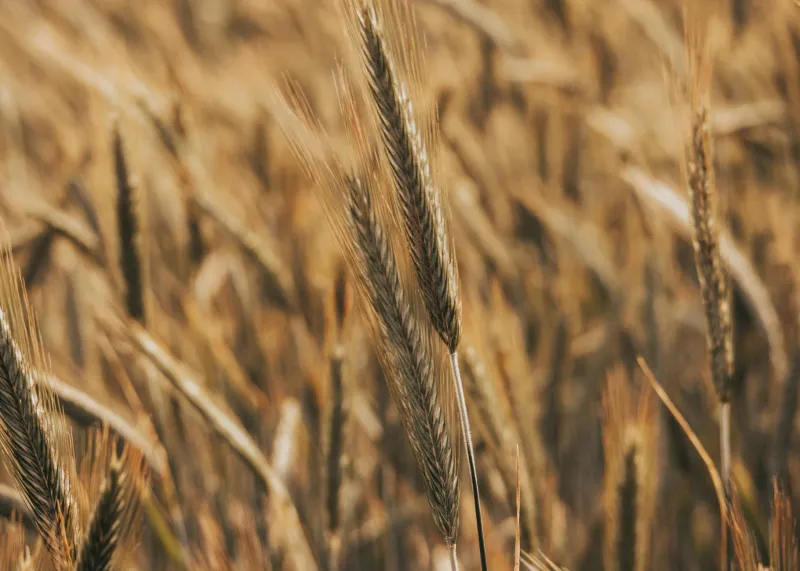
Working in makeshift laboratories and experimental plots, Borlaug began the painstaking work of crossbreeding wheat varieties. He was looking for plants that could resist disease, tolerate different climates, and produce higher yields. It was tedious, unglamorous work that required growing thousands of plants and testing countless combinations.
The Breakthrough That Almost Wasn't
For nearly two decades, Borlaug's work produced steady but unremarkable improvements. Mexican wheat yields gradually increased, but nothing suggested he was on the verge of a revolution. By the early 1960s, he was approaching 50 and wondering if his career would be remembered as a modest success at best.
Then, in 1963, something extraordinary happened. Borlaug's latest wheat varieties weren't just performing well in Mexico—they were producing yields that seemed almost impossible. Some experimental plots were generating over 8,000 pounds per acre, more than ten times the traditional Mexican average.
Even more remarkably, these "dwarf" wheat varieties (so named because they were shorter and sturdier than traditional wheat) were showing similar results across different climates and soil conditions. Borlaug realized he might have developed something that could work far beyond Mexico.
Racing Against Famine
The timing of Borlaug's breakthrough was crucial. By the mid-1960s, population growth was outpacing food production across much of the developing world. Experts predicted massive famines in India and Pakistan by the early 1970s. The situation was so dire that some scientists advocated "triage" policies—essentially writing off entire regions as unsavable.
Borlaug refused to accept that logic. In 1965, he convinced officials in India and Pakistan to try his Mexican wheat varieties. The first shipments were modest—just 35 trucks of seed crossing from Mexico to Los Angeles, then shipped across the Pacific.
What happened next defied every prediction. Indian farmers who had been averaging 800 pounds of wheat per acre suddenly found themselves harvesting 4,000 pounds or more. Pakistan saw similar results. Within three years, both countries had not only avoided famine but were approaching wheat self-sufficiency.
The Invisible Revolution
By 1970, Borlaug's wheat varieties were being grown across Asia, Latin America, and parts of Africa. The results were staggering: India's wheat production nearly doubled between 1965 and 1970. Pakistan became a wheat exporter for the first time in its history. Countries that had been facing starvation were suddenly dealing with grain surpluses.
The transformation was so rapid and comprehensive that journalists began calling it the "Green Revolution." Borlaug, the wrestling coach who had almost dropped out of college, had engineered the largest increase in food production in human history.
In 1970, he received the Nobel Peace Prize—the first agricultural scientist ever honored with the award. The Nobel Committee noted that Borlaug's work had "provided bread for a hungry world" and likely prevented the deaths of over one billion people.
The Compound Effects of Curiosity
Borlaug's story illustrates something profound about how breakthrough innovations actually happen. They rarely emerge from grand plans or obvious genius. Instead, they develop through a combination of curiosity, persistence, and the willingness to work on problems that others ignore.
When Borlaug chose Mexico over DuPont in 1944, he wasn't trying to save the world. He was simply following his interest in a field that fascinated him. When he spent decades crossbreeding wheat in experimental plots, he wasn't envisioning a Nobel Prize. He was trying to solve specific problems for specific farmers.
The Green Revolution succeeded because it emerged from the ground up, literally. Borlaug understood farming because he had grown up on a farm. He understood the challenges facing poor farmers because he had worked alongside them for decades. His solutions worked because they addressed real problems rather than theoretical ones.
The Long Odds of Changing Everything
Today, Norman Borlaug is often called "the man who saved a billion lives," but his story remains surprisingly unknown outside agricultural circles. There are no blockbuster movies about the Green Revolution, no business school case studies about Borlaug's management techniques.
Perhaps that's fitting. Borlaug's greatest achievement was making the extraordinary seem ordinary—turning potential famine into routine abundance. He proved that the most important problems are often solved not by the most obvious candidates, but by people stubborn enough to keep working when others give up.
The farm kid who almost became a wrestling coach instead became something far more important: proof that persistence in obscurity can produce results that change everything.