The Janitor's Son Who Cracked the Code of Kings—Without Ever Taking a Lesson
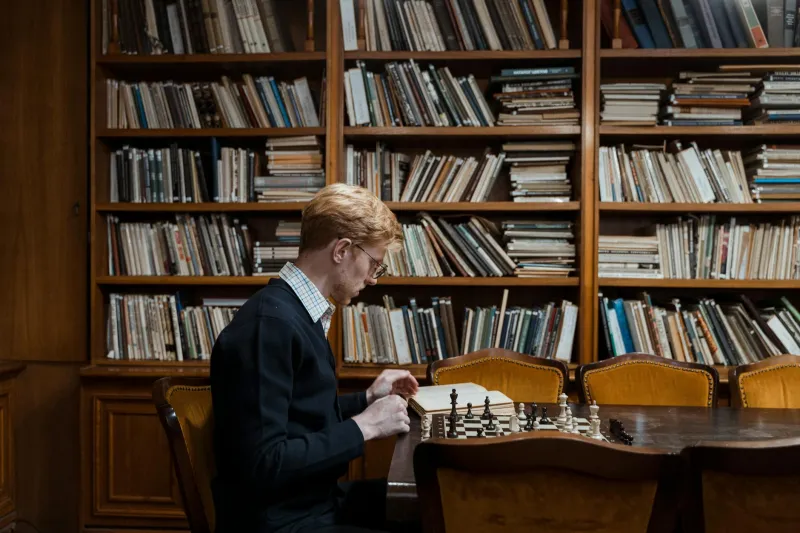
The Book That Started Everything
Seven-year-old Hikaru Nakamura wasn't supposed to become a chess prodigy. His stepfather worked as a janitor. His mother cleaned houses. Their apartment in White Plains, New York, didn't have room for luxuries—certainly not private chess tutors at $100 an hour or trips to exclusive tournaments in Europe.
But when Hikaru wandered into the local library and pulled a chess book off the shelf, he stumbled into a world where none of that mattered. The 64 squares didn't care about his family's bank account or his lack of pedigree. They just waited for him to figure them out.
And figure them out he did—faster than anyone thought possible.
When Passion Meets Obsession
Most chess champions trace their lineage through generations of masters, expensive academies, and carefully orchestrated childhoods. Hikaru's origin story reads more like a fever dream. He taught himself the game from library books, spending hours hunched over diagrams, moving pieces in his mind while other kids played video games.
His mother, Carolyn Merrow, watched her son disappear into chess with the intensity of someone solving the mysteries of the universe. "He would study for 10-12 hours a day," she recalled years later. "I had to force him to eat."
By age 10, Hikaru had devoured every chess book the library owned. He wasn't just learning moves—he was reverse-engineering centuries of strategic thought, one page at a time. The kid who couldn't afford a coach was teaching himself at a pace that made seasoned players dizzy.
Breaking Into the Boys' Club
Chess has always been an old-world game, dominated by Eastern European academies and Russian training methods that turned children into calculating machines. American players were curiosities—talented, perhaps, but lacking the systematic approach that produced champions.
Hikaru didn't get the memo about American limitations.
At 13, he was already beating masters twice his age. At 14, he achieved something that typically takes a lifetime: he became the youngest American ever to earn the title of Grandmaster. The chess establishment, accustomed to prodigies emerging from Moscow or Budapest, suddenly had to reckon with a teenager from suburban New York who had learned everything from books.
The speed of his ascent defied conventional wisdom about how mastery works. Chess champions are supposed to be methodically groomed from toddlerhood, not self-made through library visits and obsessive study. But Hikaru's unconventional path gave him something the traditional route couldn't: the hunger of someone who had to earn every advantage.
The Internet Changes Everything
Just as Hikaru was establishing himself as a force in tournament chess, the internet exploded the game's possibilities. Online platforms like Chess.com and Twitch opened new frontiers where quick thinking mattered more than centuries of tradition.
This was Hikaru's natural habitat. While classical masters spent years perfecting their endgame technique, he was playing bullet chess—games decided in minutes or seconds—against thousands of opponents around the world. His style, shaped by self-teaching and internet competition, was electric: aggressive, intuitive, and utterly modern.
"Speed chess is where you see someone's true chess understanding," Hikaru once explained. "There's no time to calculate everything perfectly. You have to trust your instincts." Those instincts, honed through years of solo study and online battles, proved nearly unbeatable.
Redefining What a Champion Looks Like
By his twenties, Hikaru had reached the top five players in the world—a position traditionally reserved for products of the Soviet chess machine. But he didn't look or act like a typical grandmaster. He streamed his games on Twitch, cracking jokes and engaging with chat while simultaneously demolishing world-class opponents.
This wasn't just entertainment—it was revolution. Hikaru was democratizing chess, showing that the game's highest levels weren't the exclusive domain of monastery-like training centers. A kid with library access and internet connection could compete with anyone.
His streaming career exploded during the pandemic, introducing chess to millions of viewers who had never considered the game accessible. Suddenly, the sport that seemed reserved for quiet geniuses in wood-paneled rooms was being played by a guy who looked like he could be your college roommate.
The Long Game
Today, Hikaru Nakamura stands as proof that greatness doesn't require permission. He never had the advantages that typically produce chess champions—no grandmaster father, no academy training, no trust fund for international tournaments. What he had was more powerful: the conviction that mastery belongs to anyone willing to pursue it relentlessly.
His story resonates beyond chess. In a world that often treats expertise as the exclusive property of established institutions, Hikaru represents the power of self-directed learning and unconventional paths. He didn't wait for the chess world to invite him in—he taught himself the language and demanded a seat at the table.
The janitor's son who learned chess from library books has become one of the game's global ambassadors, proving that sometimes the most unlikely beginnings produce the most extraordinary results. In a game of kings and queens, he showed that the real power belongs to anyone brave enough to make the first move.