Rejected by Every Door She Knocked On, She Went Ahead and Built a New One
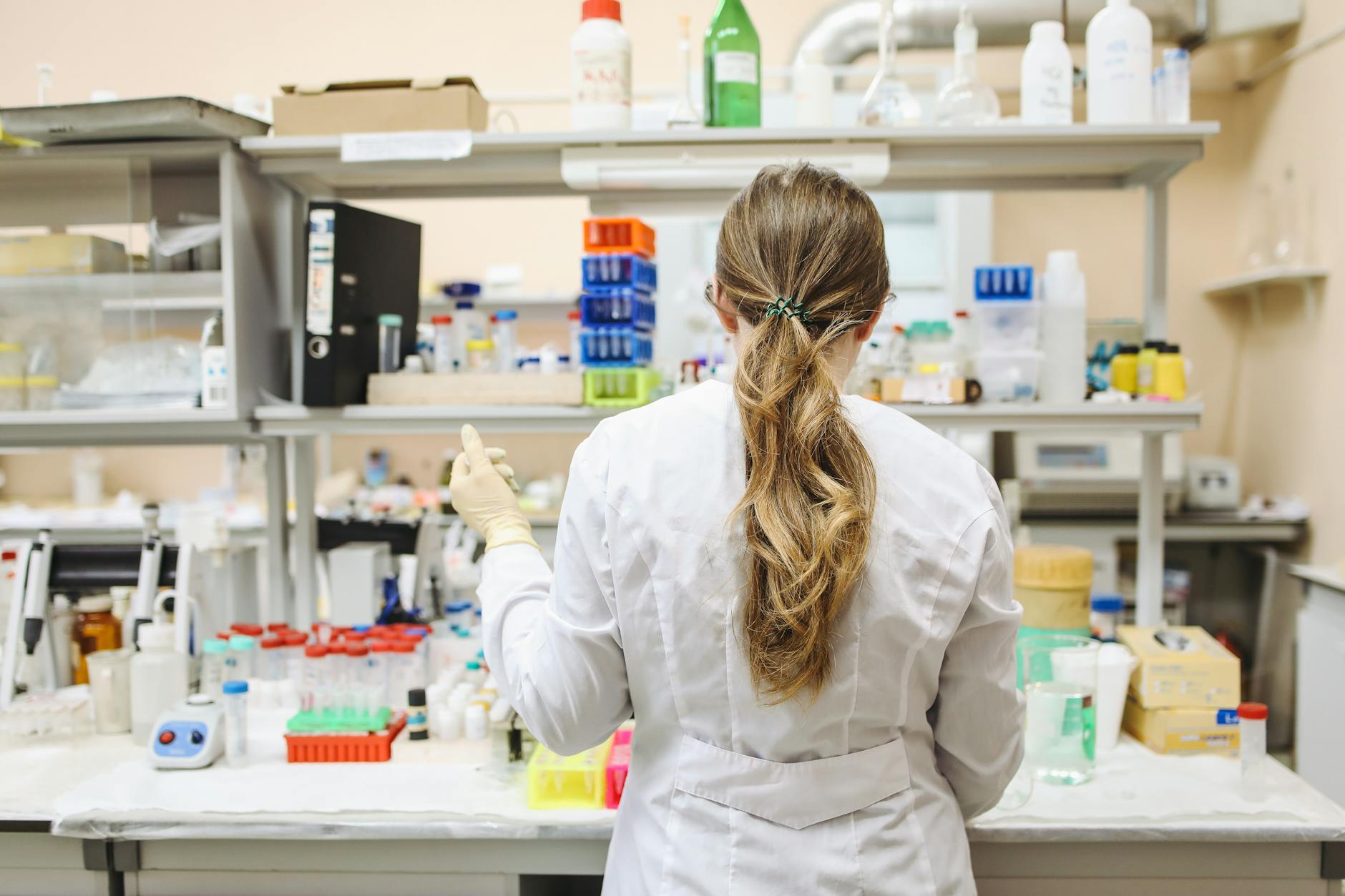
Rejected by Every Door She Knocked On, She Went Ahead and Built a New One
Gertrude Elion graduated summa cum laude from Hunter College in New York City in 1937. She had a near-perfect GPA in chemistry. She had passion, drive, and — by every measurable academic standard — the qualifications to walk straight into a graduate program and get to work.
Instead, she spent the next several years being told no.
Graduate schools across the country declined to admit her, some explicitly citing the fact that they didn't consider women worthwhile investments for limited lab space. She applied for research positions and was told the labs weren't hiring women. She took a job as a receptionist. She taught biochemistry to nursing students. She worked for a food testing company, checking the color and acidity of mayonnaise and berries for quality control.
None of this was the plan. None of it looked remotely like the beginning of a Nobel Prize story.
And yet.
The Accidental Apprenticeship
The turning point, when it came, arrived sideways — as turning points in long-odds stories so often do. During World War II, with a significant portion of the male scientific workforce deployed overseas, laboratories suddenly found themselves short-staffed and considerably less picky about who they hired. Elion landed a position as a lab assistant at Burroughs Wellcome, a pharmaceutical research company, working under a biochemist named George Hitchings.
Hitchings was, by most accounts, an unusually open-minded scientist. He cared about results, not credentials. And what he saw in Elion — who was by then in her late twenties, still without a completed PhD, still officially underqualified by the standards of the field — was someone who thought differently. Someone whose years of rejection hadn't broken her curiosity, but had somehow sharpened it.
She never did finish a traditional doctorate. She enrolled in a part-time PhD program at Brooklyn Polytechnic, but the school eventually told her she'd need to attend full-time to continue — a condition she couldn't meet while working. She left the program. She kept working.
This is the part of the story worth sitting with for a moment. The institution that was supposed to credential her, to officially sanction her right to do serious science, told her she couldn't have it both ways. She chose the work. The credential could wait, or not come at all.
What Outsiders See That Insiders Miss
Elion and Hitchings developed a research methodology that was, at the time, genuinely radical. Most pharmaceutical development in the mid-twentieth century worked by testing thousands of compounds and hoping something useful turned up — essentially educated trial and error. Elion and Hitchings took a different approach. They studied the biochemical differences between healthy human cells and the cells of pathogens — bacteria, viruses, cancer — and tried to design drugs that would exploit those differences. Target the enemy specifically. Leave the host alone.
It sounds obvious in retrospect. In the 1940s and 1950s, it was a significant conceptual leap.
Elion's specific contributions from this platform were staggering. She developed 6-mercaptopurine, one of the first effective treatments for childhood leukemia — a disease that had been essentially a death sentence. She helped create azathioprine, the drug that made organ transplants viable by preventing the immune system from rejecting foreign tissue. She developed drugs to treat gout, malaria, and herpes. Later in her career, her work laid the groundwork for AZT, the first antiretroviral drug used to treat HIV.
Each of these represented a category of suffering that had previously had no answer. She kept providing answers.
The Prize, and What It Actually Meant
In 1988, Gertrude Elion received the Nobel Prize in Physiology or Medicine, shared with George Hitchings and Sir James Black. She was 70 years old. The Nobel Committee, in its citation, noted the fundamental nature of the research approach she and Hitchings had pioneered — the idea that you could rationally design drugs rather than stumble upon them.
She had, by that point, received honorary doctorates from universities that would never have admitted her as a student. She had been elected to the National Academy of Sciences. She had, in other words, accumulated all the credentials that had once been used to keep her out of the room — after the fact, as a consequence of what she'd done without them.
There's a direct line between the rejection and the revolution, and it runs through the freedom that comes from having nothing to lose. Elion never had an institution protecting her assumptions or a department culture telling her which questions were worth asking. She came to the problems fresh, without the invisible fences that formal training sometimes builds around a researcher's imagination.
The Long Odds Club is built on the belief that the unconventional path isn't always the harder path — sometimes it's the only path that leads somewhere genuinely new. Gertrude Elion didn't revolutionize cancer research despite being shut out of the scientific establishment. She did it, at least in part, because of it.
The doors that were closed to her turned out to be the making of her. Not because failure is secretly good, but because Elion was the kind of person who, when she couldn't find the door she needed, went ahead and built one herself.