No Sheet Music, No Diploma, No Problem: The Improbable Second Acts of Chet Baker
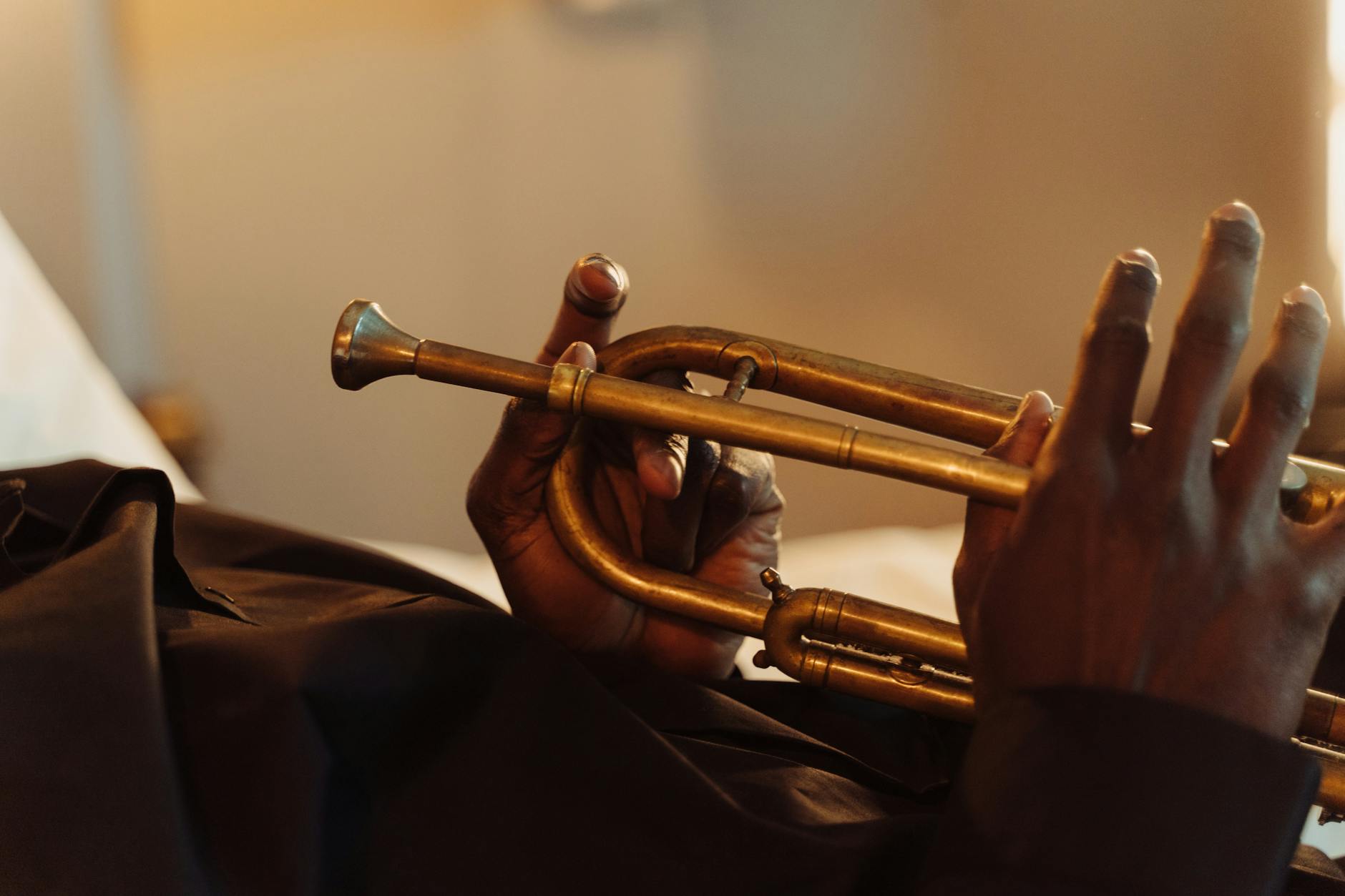
No Sheet Music, No Diploma, No Problem: The Improbable Second Acts of Chet Baker
There's a version of the Chet Baker story that gets told a lot — the one about the beautiful face, the heroin, the slow-motion fall. It's a compelling tragedy, and it's not wrong. But it's only half the picture. The other half is something rarer and, honestly, more interesting: a man who clawed his way back to relevance so many times, against such overwhelming odds, that his career starts to look less like a cautionary tale and more like a masterclass in stubborn reinvention.
Baker was born in Yale, Oklahoma in 1929, and his early years didn't exactly scream "future jazz icon." His father was a musician of modest ambitions and inconsistent presence. Money was scarce. Formal music education was basically nonexistent. When the family relocated to California during Baker's teenage years, he picked up a trumpet and started teaching himself — mostly by ear, mostly alone, in the way that kids with no other options sometimes discover they have a gift.
Here's the thing about that: in jazz, playing by ear isn't a workaround. It's actually a credential. But nobody knew that yet, least of all Chet Baker.
The Audition That Changed Everything
Baker spent a couple of years in the Army — long enough to play in military bands, short enough to avoid making it a career. When he mustered out in the early 1950s, he was still essentially an unknown quantity: a good-looking kid from nowhere with a trumpet and an unusual sound. He wasn't reading music the way conservatory graduates did. He wasn't running in the right circles. He had no formal theory training to speak of.
What he had was a tone. Warm, understated, almost conversational — the opposite of the brassy extroversion that dominated the era. When legendary alto saxophonist Charlie Parker caught Baker sitting in at a Los Angeles club in 1952, he was intrigued enough to invite the kid to join his West Coast quartet. That was the door. And it opened because of something no music school could have taught.
From there, Baker joined the Gerry Mulligan Quartet, and the recordings they made together — spare, pianoless, oddly intimate — became some of the defining documents of West Coast cool jazz. Baker's voice, when he started singing, was equally disarming: soft and slightly melancholy, like someone telling you a secret. He became, almost overnight, one of the most recognizable figures in American music. Downbeat magazine named him best trumpet player two years running. He was on the cover of everything.
All of this, remember, without a single music degree to his name.
The Walls That Should Have Stayed Walls
Then came the part of the story everyone knows. Baker's heroin addiction, which had been a background hum for years, moved to the foreground in the late 1950s. There were arrests. There were deportations from multiple European countries — Italy, Germany, England — where he'd fled partly to escape American drug laws and partly because Europe was more forgiving of jazz musicians in general. His passport was revoked. His reputation curdled.
In 1968, a group of men attacked Baker in San Francisco — the exact circumstances remain disputed — and knocked out most of his teeth. For a trumpet player, that's roughly equivalent to a surgeon losing the use of his hands. The embouchure, the precise muscular configuration of lips and jaw that produces a trumpet player's sound, depends entirely on the teeth behind it. Most people in the music world quietly wrote him off.
Baker spent years learning to play again with dentures. Years. He didn't quit. He didn't pivot to a different instrument or a different career. He sat with the dentures and the pain and the humiliation and figured it out, the same way he'd figured everything else out — slowly, by feel, without a roadmap.
The Comeback That Kept Coming Back
By the late 1970s, Baker was recording again. By the 1980s, he was experiencing something close to a full critical rehabilitation — younger listeners discovering his early recordings, European labels signing him, documentary filmmakers following him around. Bruce Weber's 1988 film Let's Get Lost arrived just months after Baker's death and introduced him to an entirely new generation.
The film is gorgeous and sad and doesn't shy away from the wreckage. But it also captures something the tragedy narrative tends to miss: Baker on stage, still playing, still finding that sound. Still, somehow, showing up.
What's striking, in retrospect, is how consistently Baker's outsider status worked in his favor. He never learned to play the industry game because he never learned there was one. He played the way he played because it was the only way he knew. His lack of formal training meant he had no received ideas to unlearn, no established style to imitate, no one telling him his approach was wrong.
The Long Odds Club exists to tell stories about people who found a way through when the conventional path was closed. Chet Baker's path was closed about seventeen different times. He found a way through every single one of them — not because he was lucky, and not entirely because he was talented, but because he was constitutionally incapable of accepting that the door was locked for good.
Some people are just built that way. The music world, fortunately for all of us, is better for it.