The Doctor Said It Was Over. She Decided to Ask a Mountain Instead.
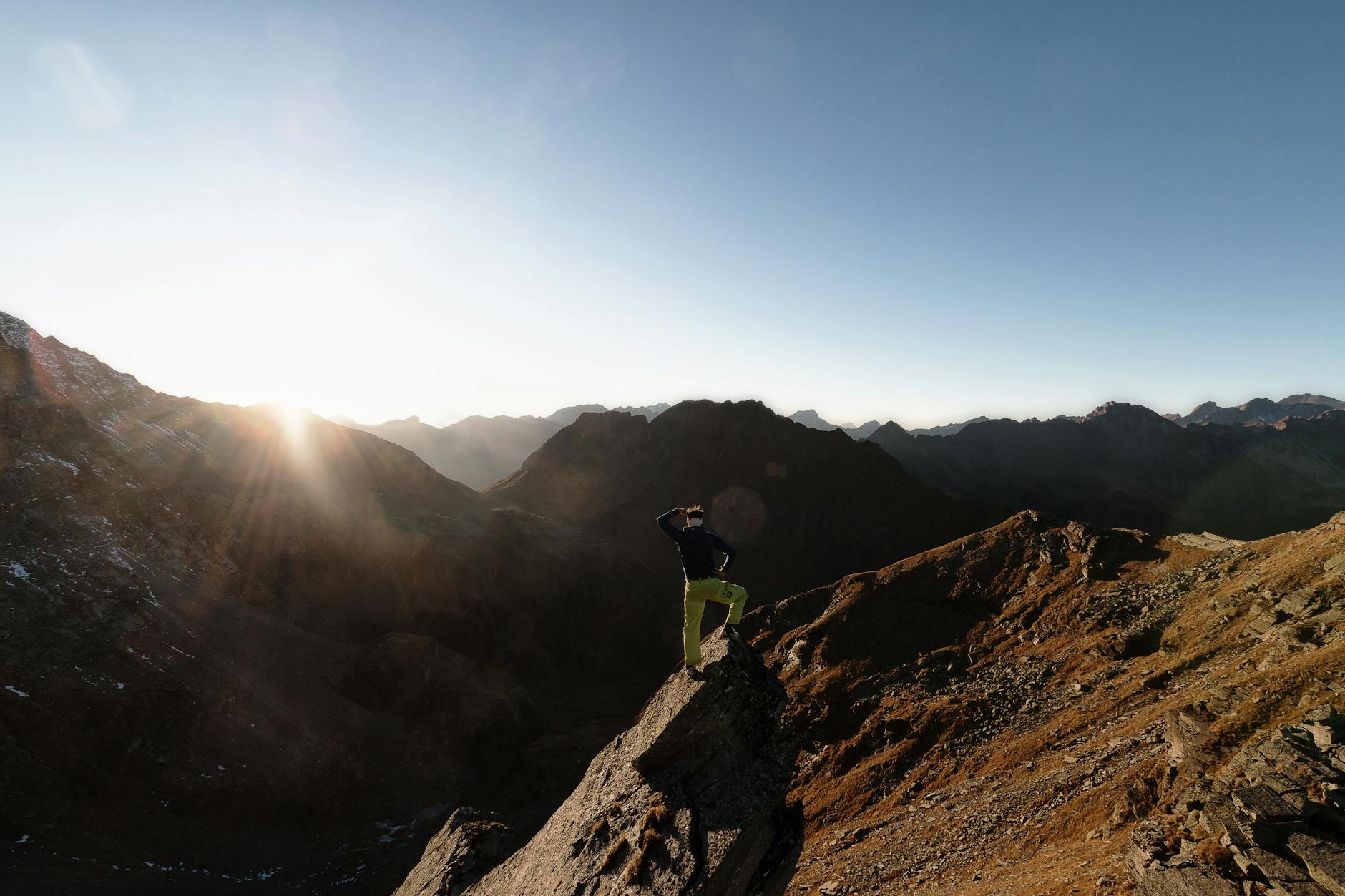
The Doctor Said It Was Over. She Decided to Ask a Mountain Instead.
Somewhere in a hospital in New Delhi in the spring of 2011, a doctor sat across from a 23-year-old woman and explained, with the measured certainty of someone who had delivered this kind of news before, that her athletic life was finished.
Arunima Sinha had been a national-level volleyball player. She had represented India. She was young, strong, and competitive in a way that people who've never played serious sport sometimes struggle to understand — the kind of competitive that isn't a personality trait so much as a basic orientation toward the world.
None of that, the doctor explained, was especially relevant now.
A few days earlier, Sinha had been riding a train from Lucknow to Delhi when a group of thieves grabbed her bag. She resisted. They threw her from the moving train. She landed between the tracks and was struck by an oncoming train on the other side before she could move. She lay there for the better part of a night before anyone found her.
The surgeons saved her life. Her left leg, amputated below the knee, was gone. Her right leg was badly damaged. She had lost enormous amounts of blood. The medical team was, by any reasonable measure, doing her an enormous favor just by keeping her alive.
The doctor's prognosis wasn't cruel. It was just accurate, based on everything medicine understood about outcomes in cases like hers.
It was also completely wrong.
The Particular Cruelty of a Confident 'No'
There's a specific kind of damage that gets done when an authority figure delivers a verdict on your future. It's different from a stranger's skepticism or a competitor's trash talk. A doctor, a coach, a teacher — someone with credentials and context and no apparent reason to be anything but honest — carries a weight that casual doubt doesn't.
Most people, hearing what Arunima Sinha heard in that hospital, would have adjusted their expectations. Reasonably. Understandably. They would have grieved the athletic career and started imagining a different kind of life. That's not weakness. That's what people do when someone who knows more than them tells them something is finished.
Sinha didn't do that. But it's important to understand that her refusal wasn't simple stubbornness or the kind of motivational-poster defiance that gets flattened into a slogan. It was something more specific and more interesting than that.
While she was still in the hospital, she decided she wanted to climb Everest.
Not as a vague someday ambition. As a plan.
Learning to Walk, Then Learning to Climb
The period between the hospital bed and the mountain is where most telling of this story skips too quickly. It deserves more time.
Sinha was fitted with a prosthetic leg. Learning to walk on it was painful in the way that only people who have done it can fully describe — a constant negotiation between a body that remembers what movement used to feel like and a new mechanical reality that doesn't care about that memory.
She began training with the Indian mountaineer Bachendri Pal, the first Indian woman to summit Everest, who became a mentor and a critical part of Sinha's preparation. The training was brutal by any standard. It was several orders of magnitude beyond brutal for someone managing a prosthetic limb on technical terrain.
Sinha climbed with a prosthetic on her left leg and a rod in her right. She trained in the Indian Himalayas. She fell. She got up. She trained some more. She did this for roughly two years before she was anywhere near ready to attempt the world's highest peak.
People who climb Everest with two fully functioning legs and state-of-the-art equipment at the peak of their physical condition still fail, frequently, sometimes fatally. Sinha was attempting it with a prosthetic, a damaged leg, and a body that had been through a trauma that would have ended most people's outdoor ambitions permanently.
The Summit, and What It Proved
On May 21, 2013 — just over two years after the train attack — Arunima Sinha reached the summit of Mount Everest.
She was 25 years old. She was the first female amputee in history to stand on top of the world. She planted the Indian national flag and a flag of her home state, Uttar Pradesh, at 29,032 feet.
The achievement made international news. India celebrated her. She received the Padma Shri, one of the country's highest civilian honors. She wrote a memoir. She gave speeches. She became, in the language of the motivational circuit, an inspiration.
But there's something more interesting than inspiration in this story if you're willing to look for it.
The doctor who told her she'd never compete again wasn't wrong in any malicious or careless way. He was applying a reasonable framework to available evidence. The problem is that reasonable frameworks, by definition, are built on what has happened before. They struggle with people who are about to do something that hasn't happened before.
Every record that has ever been broken was, before it was broken, considered impossible or at least unreachable by people with serious credentials and genuine expertise. The framework that said Sinha's athletic life was over was the same framework that had never had to account for someone like Sinha.
The Limits We Rent From Other People
There's a question worth sitting with here, beyond the extraordinary specifics of one woman's climb.
How many of the ceilings we accept as permanent were actually just borrowed from someone else's imagination? How many times have we adjusted our expectations, quietly and without drama, because a person with authority told us what was and wasn't possible for someone in our situation?
Sinha's story doesn't argue that medical advice should be ignored, or that willpower is a universal solvent for physical reality. There are genuine limits. Some prognoses are correct. Some doors are actually closed.
But some aren't. And the terrifying thing — the thing that makes the Arunima Sinha story so unsettling if you let it be — is that from the outside, from the position of the person receiving the verdict, it is genuinely difficult to know which kind of 'no' you're being handed.
She decided, in a hospital bed with a missing leg and a damaged body, to treat hers as the second kind.
The mountain, in the end, agreed with her.